
 |
The evolution of military small arms during the Cold War reflects a period of rapid innovation driven by lessons learned in World War II. For example, the AR-15’s transformation into the M16A1 marked a significant shift in U.S. military doctrine, embracing lightweight materials and high-velocity cartridges to meet modern combat requirements. Similarly, the U.S. Army’s extended reliance on the M1911A1 pistol—despite its World War II origins—underscores the complexity of procurement decisions and the challenges of standardization across allied forces.
A key factor influencing these decisions was STANAG (Standardization Agreement), a NATO framework designed to ensure interoperability among member nations. STANAG shaped everything from ammunition specifications to weapon platforms, driving collaborative development and logistical efficiency during the Cold War.
When we picture World War II firearms, we think of hardwood stocks and steel receivers, like the iconic M1 Garand. Post-war, however, nations raced to modernize their arsenals with advanced materials, improved ergonomics, and higher-capacity systems. These innovations not only defined Cold War weaponry but also laid the foundation for many of today’s most popular firearms.
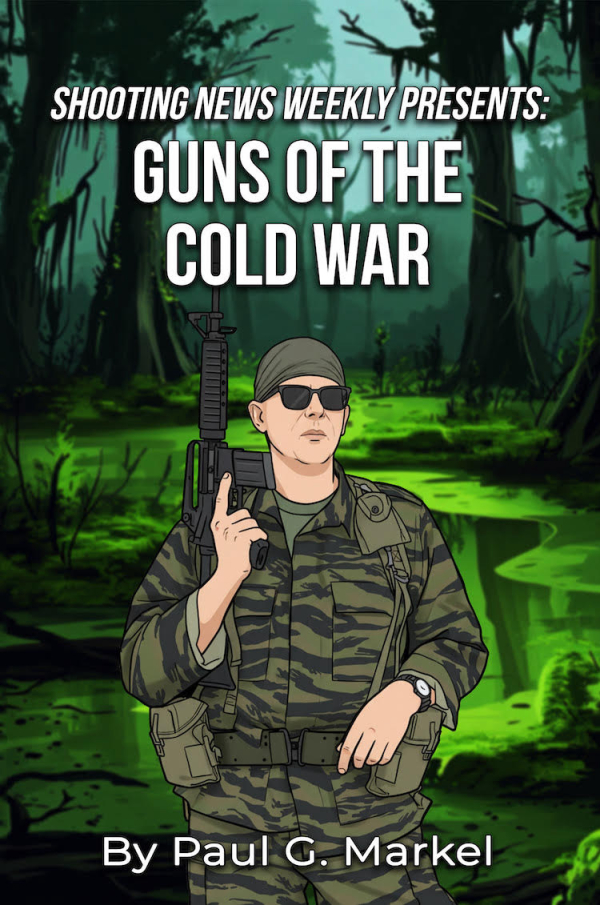
Guns of the Cold War explores this fascinating era in depth. The rifles and pistols developed during the Cold War have unique stories and many of them greatly influenced the firearms that we use today. “Guns of the Cold War” began as a series of articles published on Shooting News Weekly and is now available as Amazon Paperback and Kindle versions as well as in audiobook format. Over 100 photos are included to support the text.