Smith & Wesson Brands, Inc. has acquired Savage Arms, Inc., the 132-year-old Massachusetts-based rifle and shotgun manufacturer, from JDH Holdings for $160 million. The acquisition combines two historic American firearms manufacturers, with Savage bringing approximately $160 million in annual net sales and 500 employees to create the largest commercial firearms manufacturer in the United States.
Vortex is introducing new Fall/Winter 2026 apparel colors across hoodies, T-shirts, and graphic tees inspired by changing landscapes and colder weather, featuring fresh seasonal colors and new camo options.
The Double D Foundation presented its 2026 Patriot Award to Pete Brownell, Chairman of Brownells and 2nd Adventure Group, during its Annual Georgia Banquet on October 15. Brownell was recognized for his leadership, integrity, and commitment to protecting the Second Amendment and advancing shooting sports. The Brownells Foundation also joined the Foundation's Corporate Partners Program.
Hornady has been recognized as Ammunition Manufacturer of the Year by the National Association of Sporting Goods Wholesalers (NASGW) for the fourth consecutive year. Vice President Jason Hornady praised the award and highlighted the company's commitment to innovation and customer service through their wholesale distribution partners.
Oregon State Police SWAT won the 2026 Staccato National SWAT Championship, presented by Trijicon, held Sept. 25–27 at Staccato Ranch Vegas in Nevada. Nearly 40 elite law enforcement teams from over a dozen U.S. states, Canada, and Puerto Rico competed for $150,000 in prizes, with Washoe County Sheriff's Office placing second and Lubbock PD third.
The National Rifle Association and Second Amendment Foundation filed an amicus brief in United States v. Cordova before the Fifth Circuit Court of Appeals, urging adoption of a dangerousness standard for disarmament challenges. The brief argues that America's historical tradition supports disarming only dangerous persons, not peaceable citizens or nonviolent felons.
The NSSF filed a lawsuit against New Mexico Attorney General Raúl Torrez challenging the state's seven-day firearm waiting period, which federal courts have twice ruled unconstitutional. Despite rulings in Ortega v. Grisham, Governor Michelle Lujan Grisham and Attorney General Torrez continue enforcing the law against law-abiding citizens.
The Second Amendment Foundation and National Rifle Association filed an amicus brief in United States v. Cordova, urging the Fifth Circuit to adopt a dangerousness standard for lifetime federal firearms bans. The brief argues that historical tradition supports disarming only dangerous persons, not all felons, and that nonviolent felons who completed their sentences should retain Second Amendment rights.
The Second Amendment Foundation and partners including the National Shooting Sports Foundation and National Rifle Association filed a lawsuit challenging New Mexico's House Bill 129 waiting period for firearms purchases. The suit seeks to expand a previous Tenth Circuit ruling declaring the law unconstitutional to cover all SAF members, as New Mexico continues enforcing it despite the court decision.
The Firearms Policy Coalition (FPC) secured a historic victory in Heeter v. James when U.S. District Judge John L. Sinatra, Jr. struck down New York's 2022 body armor ban, holding that defensive body armor is constitutionally protected under the Second Amendment. The court granted FPC summary judgment and issued a permanent injunction against the state's restrictions on purchasing and selling protective armor.
Safe LivinG, in collaboration with the Army & Air Force Exchange Service (AAFES), will bring its firearms safety and suicide prevention experience to Fort Bliss Main Exchange on October 23–24. The event features a mobile range with FATS by InVeris simulators, demonstrations from SABRE and Streamlight, and family-friendly firearm safety education.
ZeroTech Optics USA and Infinite Outdoors announced a strategic partnership offering ZeroTech customers a 30-day free Infinite Outdoors membership trial and providing Infinite Outdoors members with an exclusive 25% discount on ZeroTech optics products.
Gun Tote'n Mamas has launched its Rose Collection, featuring four lambskin concealed carry handbags designed for women prioritizing style and functionality. Each design accommodates a SIG Sauer P365 or similar firearm, with prices ranging from $115.95 to $179.95 available through the GTM online store.
Remington Gun Care introduced the Rechargeable Mini-Dehumidifier to protect firearms from moisture in gun safes and storage areas. The device features water crystal technology, a motion-activated light, wireless hygrometer and thermometer, and operates up to 60 days before recharging.
TriStar Arms announces the Viper G3, the next generation of its popular Viper semi-automatic shotgun series. The new flagship features a robust internal system, oversized controls, and accommodates a wider range of ammunition in 12, 20, and 28 gauge, plus .410 bore, with suggested retail pricing from $739 to $1,129.
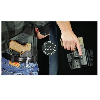
FALCO Holsters announced four new hybrid holsters: the A915, A915 L, A916, and A916 L, combining Italian leather with U.S. Kydex for hip and appendix carry. The A915 models feature traditional hybrid construction for hip carry, while the A916 models introduce the TalonGuard platform for appendix carry, with both available in standard and light-bearing configurations.
Tactacam has integrated its DEFEND 360 Cellular Camera with the REVEAL Mobile Application, allowing hunters to manage both camera types in one platform. The integration includes new features like Live View recording, 2-Way Audio, and AI Object Tracking, alongside REVEAL's Hunt Radar and mapping tools.
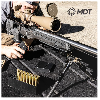
MDT has expanded JAE-G5 chassis compatibility to the Remington 700 right-hand long action CIP, bringing magnum-length builds to the competition-focused platform. The chassis features adjustable length of pull, cheek height, and barricade stop position, with M-LOK forend and ARCA rail compatibility. Available in Black starting October 20, 2026.
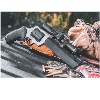
Taurus launches an 8-inch barrel Raging Hunter revolver chambered in 350 Legend, joining existing 10-inch and 14-inch models. The six-shot revolver features a non-fluted cylinder, cushioned grip, and Taurus Double Lock System, available in two-tone or black finishes.
Derya Arms announced the TM22 Timekeeper, a semi-automatic .22 LR rifle featuring an adjustable stock, 18-inch threaded barrel, and upgraded sight package. The lightweight rifle ships with two 10-round magazines and is available in multiple colors with an MSRP of $249.
Zanders, an all-women-owned distributor based in Sparta, Illinois, is the first to release the Canik METE MC9LS Flying Aces, a 9mm handgun featuring World War II aviation-inspired laser-ablated Cerakote artwork. The optic-ready pistol includes two 17-round magazines, holster, carrying case, and accessories.
The Montana Land Board approved Montana Fish, Wildlife & Parks' proposal to acquire an 86-acre easement from the Montana Department of Natural Resources & Conservation for developing the Logan Public Shooting Range south of Logan. The project, funded by a Pittman-Robertson grant and state general license dollars, will provide safe recreational shooting facilities including rifle, pistol, and shotgun ranges in the Gallatin Valley.
C&H Precision, a family-owned maker of red dot optics and firearm accessories based in Richmond Hill, Georgia, will exhibit at the IACP 2026 Annual Conference and Exposition October 24-27 in Orlando, showcasing its product lineup and custom services to law enforcement leaders and first responders.
UNIT Solutions will exhibit at the International Association of Chiefs of Police 2026 Annual Conference in Orlando, showcasing the UNIT9 Training Pistol and UNIT4 Training Rifle with live demonstrations. Attendees can meet with the sales team to discuss agency training programs at booth 3172.
Hook & Barrel Magazine founders Natalie and John J. Radzwilla appeared on Fox News's 'The Will Cain Show' on October 20, 2026, discussing how they built their outdoor lifestyle brand and their vision for supporting the outdoor industry's growth.
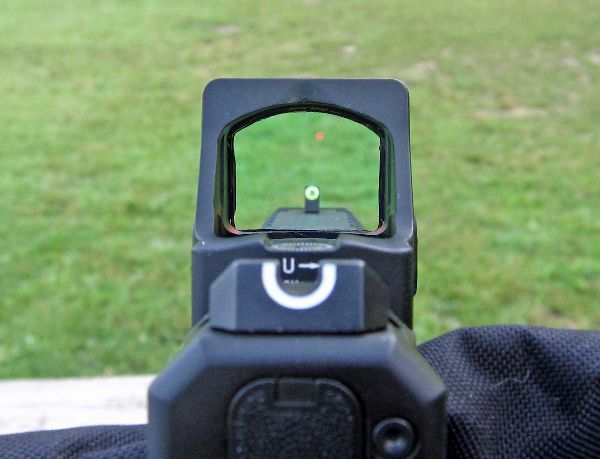
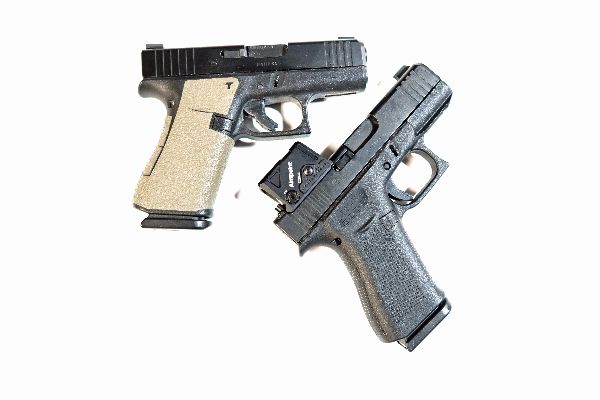
Had I read the article first, I’d have seen the first general issue that arose. That was the issue of “fairness” on the academy range. In Erick’s case, it was everyone in a group having to shoot with irons on their pistols, disabling the optics. Why?
It wasn’t fair to non-optics equipped types to have those with PMOs shoot with a dot, resulting in “better scores.”
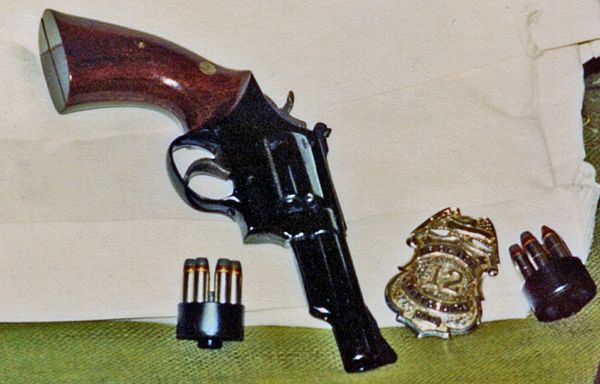
I graduated basic in 1978, in the days that only revolvers were allowed at the academy – even those of us who carried autos.
We all have to be the same you know.
Many of us arrived with speedloaders – a good many had these as issued equipment – but no use of them was allowed. Why?
“It’s not fair” to those who don’t have them.
Frankly, the last thing on my mind in a fight is being fair. The only thing is “what does it take to get me out of this?”
The fact that we weren’t allowed to participate with gear that we were authorized to carry – or mandated to carry, in the cases of those from agencies who issued life-saving gear – amounts to negligence.
Or it would today.
More critically, it’s the “gear made them better” canard. I remember the results when we transitioned from revolvers to autos in 1986. We were all amazed at how well people shot.
That didn’t last … at all. It never does.
“But he qualified!”
That was then. What have you done for him lately?
Sustainment is key to maintaining abilities. That means handling, regular practice (even – or particularly dry practice), keeping up with industry trends.
They’re finding people do well in the pistol optics classes. Of course, they just finished one-, two- or three days of transition. They’re going to be better at the end of the class.
Give them a few months, then have them shoot. It’ll look like it’s time for the rubber-gun squad.
An opinion widely broadcast recently is that regardless of the expense involved in acquiring and issuing guns and optics, the real expense in time and money is training.
Training is likewise absolutely critical to the safety of officers and citizens.
To think we did the job with a fixed-sight 38 revolver and twelve spare rounds of ammo. But, before us, there were American cops with 32 revolvers and maybe some loose ammo in a pocket.
It’s all relative.
What about metallic sights? They’re the default, the base; it’s helpful to know how to shoot accurately using them.
But, in the fight, if you’re good with the optics and they work, have at it.