
 |
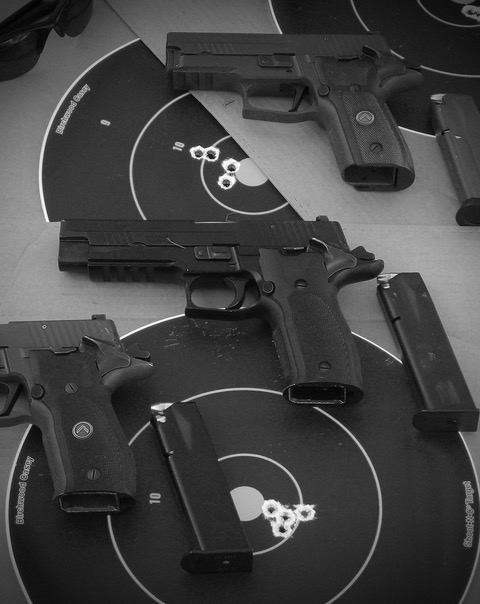
A favorite topic among all shooters is “accuracy.” But accuracy can be defined in many different ways, depending on context. Long distance shooters expect to get hits at 1,000 yards that fit within a few inches. In 2018, a bench-rest shooter’s five round group measured 1.068 inches. Defensive accuracy is about placing hits within the proper area of an attacker’s body as efficiently as possible. A group size of five inches at four yards is good enough -- if they arrive in a timely fashion. “Timely” is the key term. There is such a thing as being too accurate – if you’re too slow.
Learning to shoot begins with the fundamentals of marksmanship – Aim, Hold, Press and Follow-through. Shooting accurately is the only goal. It takes plenty of repetition, and the pace is slow. There’s no “speed” shooting until you can place hits exactly where you want, at various distances, with predictability. This is the only path to becoming proficient; eventually, with repetition you become efficient. The same goal is accomplished, but in a more compressed time frame.
At some point you begin searching for that magical blend between accuracy and speed. It’s a balance between the accuracy required and how quickly this can be accomplished. In the fight, only accurate hits count. Every shot is a precise one. “Group size” is dictated by the size of the target; the pelvis is a larger target than the head. The speed you fire, producing accurate hits, is regulated by distance. The firing tempo for close, large targets is rapid. As distance increases, or the size of your “target” changes – now, you can only see his head – the pace is slower, more deliberate. Firing at seventy-five yards becomes a pure marksmanship drill, except lives depend on the results.
Many shooters never discover this balance. They err too much on the accuracy side, especially at close distances, and must be forced to shoot quicker. It’s usually a surprise when they discover just how rapidly they can fire and hold the accuracy needed. Again, this is coarse accuracy on larger targets. The other side of the coin is attempting to hit the same size target, but at ten times the distance. Now, I’m having to give them mental tips on how to press the trigger smoothly while maintaining visual focus on the front sight to hold alignment.
Your shooting tempo isn’t something that can be determined by comparisons against others. Discovering your speed for firing is easy. Start close, with large targets – silhouettes, for example. Shoot faster and faster until you’re not getting the desired accuracy. Now, slow down. For that distance and size target there’s your speed. Increase the distance and repeat.
Always keep in mind “predictability.” You know it’s going to be an acceptable hit before pressing the trigger; it’s not necessary to see results on target. If you’re not sure, slow down. Determining your shooting pace is only part of the equation. The difficulty is having the discipline to maintain this control in the fight. Study this well.
Tiger McKee is director of Shootrite Firearms Academy. He is the author of The Book of Two Guns, AR-15 Skills and Drills, has a regular column in American Handgunner and makes some cool knives and custom revolvers. Visit Shootrite’s Facebook page for other details.