
I wasn’t sure the right way to go about it, but I’d seen some videos on various people explaining the GSSF Indoor League program. With a range of different potential courses of fire, I guessed what course would be shot and I committed to shooting it with rimfire and with centerfire.
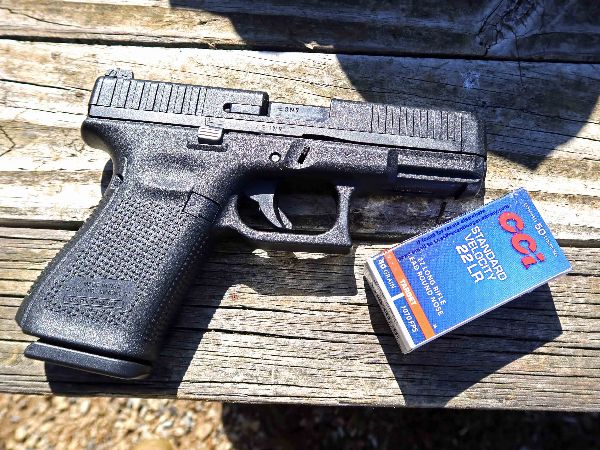
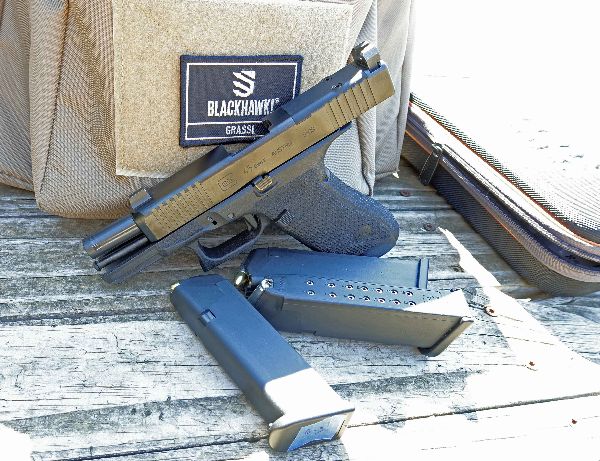
The best way to learn sustained fire, I believe, is to first be able to line up sights (or deliver the dot to your eye-target line) while keeping things still as possible through ignition and seeing if you can perform that in the time limits involved. While some will see the “gallery” course as having long times for the number of rounds fired, you’d be surprised how quickly time goes while you’re trying to be precise.
The idea is to accumulate as many points as possible – 500, if you can arrange it – within the time limits involved. It’s not to shoot as quickly as you can hit the target “somewhere.” It may not sound like fun, more like focus and discipline, but that’s why some of us shoot.
The course uses the AC-1 Target supplied by GSSF. It’s analogous to the NRA D-1 “R2D2” or “tombstone” target. I used D-1C repair centers for practice. No need to get an entire sheet to just see if I can do it.
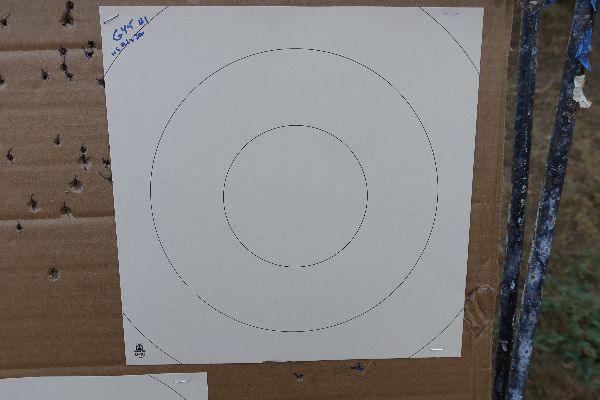
I only had a single other practice session for the first of the GSSF Indoor League matches I’d attend. For my second trip, I wanted to confirm zero while practicing a likely course of fire (listed here, opens to a PDF). The load I selected was CCI Blazer Brass 115gr FMJ; the gun was the G45 Gen6.
I thought it’d strike close to the same POA as the ammo in the first trip, but I didn’t want to find out during the match.
I recorded time and hits for each stage. Shooting on repair centers for the D-1 targets –with scoring rings like the AC-1 Target supplied by GSSF -- I had one target for the two close lines (5- and 7-yards) and another for the more distant lines (10, 15 and 25-yards).
Holding center of the “X,” I shot 200-20X at the close lines. My time was just over 13 seconds, but I felt like I lacked a rhythm like when shooting PPC. At the 10-yard line, I was only slightly over 13 ½ seconds, but I pushed a hit out of the X-ring.
Things started to fall apart after that. Without the timing, I shot just over 15 seconds at fifteen yards and had two out of the X.
At 25 yards, I had two rounds over time and put five more out of the X. This wasn’t so much a sights-and-trigger thing as a getting back in line thing. I also noted that I readjusted my grip during the string.
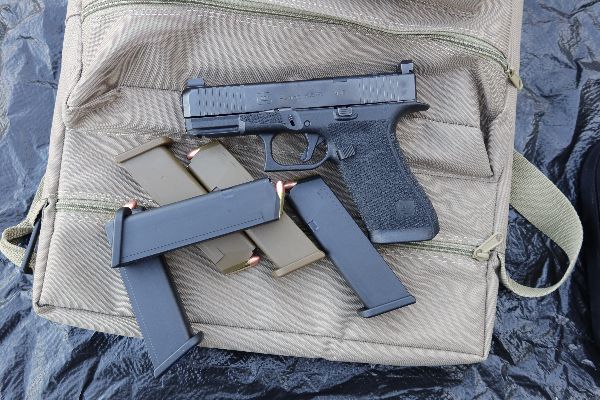
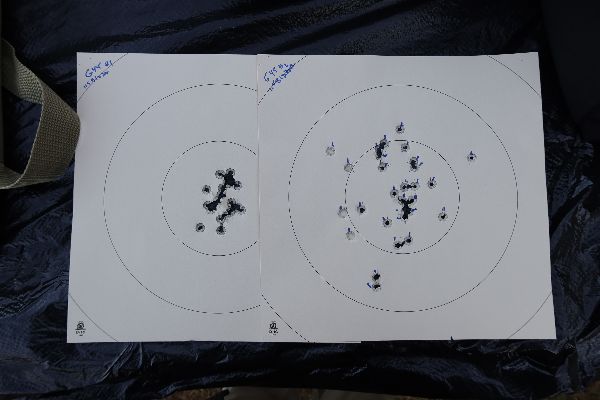
That first match was going to be interesting. I calculate that the score would have been 470, but the 42-Xs would likely be down to 39, if you count down from the highest scoring for shots over time.
Lesson learned. I have to get the timing down to get the job done.
The accuracy is there. The trigger is wearing in nicely, but the combination of the different trigger feel and difference in the gripping surface of the frame is keeping me out of the running.
More practice with sights and triggers didn’t hurt so I did a one-handed bullseye “ball and dummy” effort from 25-yards with a Ruger LCRx-22. With Remington Golden Bullet ammo, I’d set up for a shot, take it, pause and reset.
That entails opening the cylinder and spinning it, closing the frame onto the cylinder without looking. In the eight-shot cylinder, I’d gone five live rounds before a dry snap happened. The sights didn’t move.
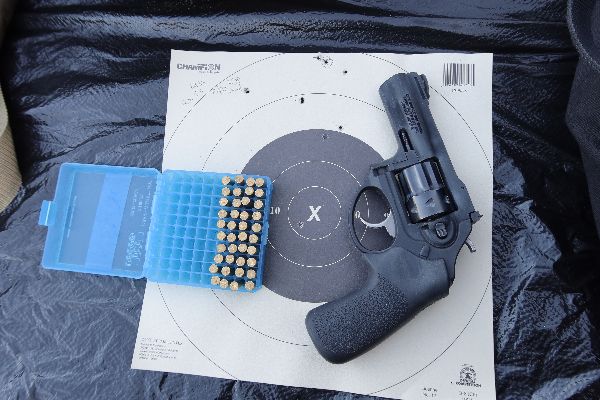
I found, during a break, that every round but one was going high. When I replaced a pair of empties with live rounds, to give me 10 on target, I found I got plenty of dry practice. Holding lower, I went through the cylinder, finally getting the last two.
I found that the fly-weight revolver was moving more than I needed – but I got nine in the repair center. In spite of a sub-6 hold, the hits were still centered at 12 o’clock.
I wasn’t going to adjust the sights as it was more a grouping exercise than an accuracy exercise.
Taking a business envelope and drawing a one-inch square near the middle of it, I attached it to the backer and stepped off twelve paces. Shooting one handed, I put six hits on it, including one in the square. I moved up to five yards and shot the remaining pair of rounds into one hole.
It was a good workout, but I’d need timing and good fortune to break 500 in a match.
– Rich Grassi