
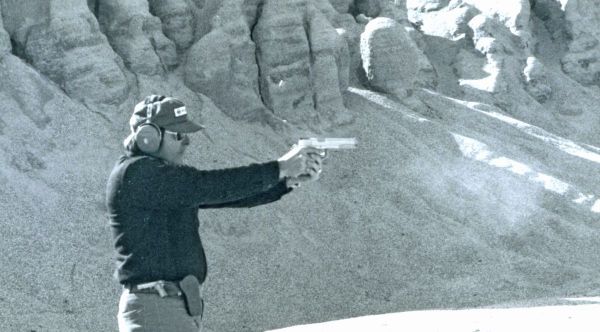
I was recently treated to yet another “this old technology is bad because it’s old and I said so” opinion piece. It was in addition to a discussion about how compact double action revolvers aren’t that popular – it’s just that more companies making them are simply appealing to those of us on the fast track to final judgement.
We may have proportionally more disposable income, but we also have more infirmities that make a snub a personal protection workaround. Besides, it seems the buying population isn’t completely from the birth of the Rock ‘n Roll era.
The latest piece was about how the 1911 handgun system is obsolete. I won’t go word-for-word as most of us know the weaknesses inherent in the system. With that in mind, there are young people in social media who are causing some resurgence of interest in the relic as a personal protection piece.
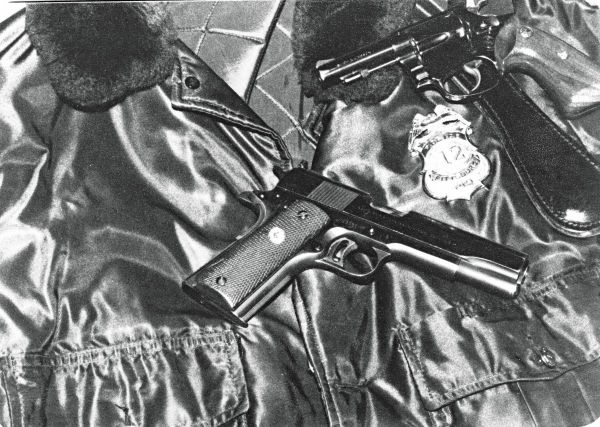
We know the veteran is old; the model number gives you an idea and, if you can subtract (the commentator couldn’t), you can figure out the age of the design. The caliber is likewise outdated, being slightly younger than the 9x19mm, made for the Pistole 1908.
Note the date.
Reliability has always been an issue. Part of it is people “knowing” how to “fix it” and “make it better.” Part of it was the gun show magazines that began appearing in the late 1960s and on as stocks of original GI mags were depleted. Another bit was injudicious use of the modern power hand grinder.
Not knowing how to tune an extractor or guessing why you get the feedway stoppage or why you get lock-back on a still-loaded magazine should largely be a thing of the past in the internet age.
They take some hand-fitting. There are low-cost pistols from the Eastern Mediterranean area that seem to be quite well made and reliable. Still, changing out some springs and using appropriately applied oil makes a difference.
Magazine capacity was originally seven rounds of 45 ACP. Those who’d come up with a six-shooter didn’t see that as a problem. In the era of “panic fire” (mischaracterized suppressive fire), you’re going to run low quick.
In the discussion I saw, there were complaints about the military transition to the 1930s era double/single action designs, including (appropriately) the issue of trigger reach. The Para Ordnance double stack was touted as the “improved” capacity 1911; I never found a double stack version that worked – due to magazines – but their single stack design was 100% for the time I had it.
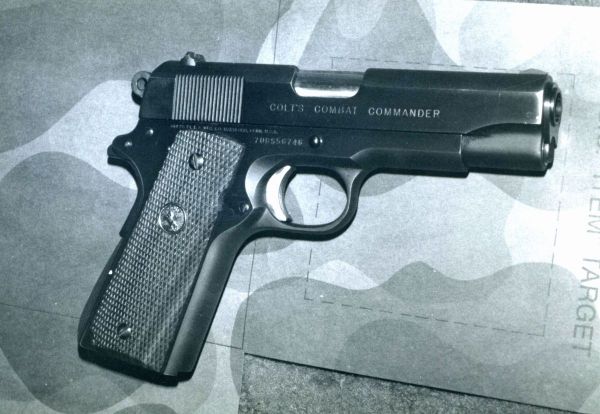
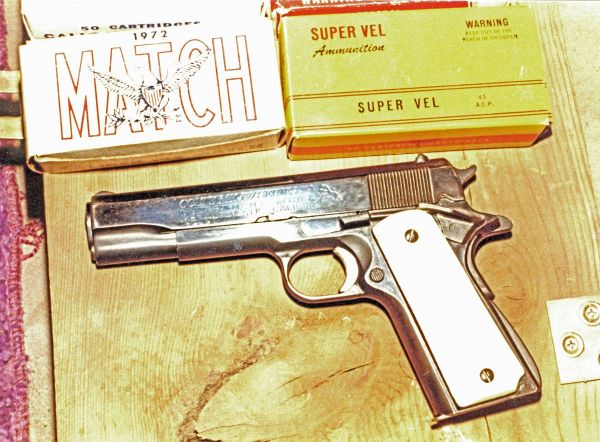
Now we have modern striker-fired pistols – guns that tend to be easily maintained, require only parts changes with no fitting, have one trigger press to learn and have larger cargo spaces.
Let’s face a few facts.
Uncle Sam moved on a long time ago, 1985, for the biggest component of the services. A small segment of special operations clung to some pistols of the 1911 variety; but some used HK USPs of some variant, more used the SIG P226 and the GLOCK 19.
The originally specified and A1 variants of the US service pistol aren’t and haven’t been in the running. When we move to LE, it appears that there is some movement to double-stack 1911s (that’s what they call them) in 9mm. Some are pricey and there are still some magazine issues, though it seems some vendors have finally sorted that out. They even have optics capabilities, something that may be an agency requirement.
For citizens, the 1911 is blessed with a wide selection of after-market support, a range of reputable mechanics, parts, accessories and support gear.
The magazines are, in some ways, better now than ever.
As to caliber, the more elderly 9x19mm is featured in a number of “otherwise-1911” pistols. Pick your poison.
- Rich Grassi