
The general way of things is to accentuate your strong points, do what you’re good at. When it comes time to trying to improve, you have to work on those aspects that are not your favorite; you’re not particularly good at them.
We had an officer who wasn’t particularly accomplished with the sidearm. He never carried it off-duty (that we know of; he was present at a robbery and confessed he hadn’t been armed), he was never one of those at “open range,” an opportunity to practice, he didn’t sign up for officer safety classes (back when training wasn’t obligatory).
He liked qual courses that started up close so he could hit the target, knowing that his rounds from distance would be elsewhere. The plan was to have enough bullet holes at the short lines that he “passed.”
When he was in a gun retention class (mandated) that began with data from the FBI Uniform Crime Report System, Law Enforcement Officers Killed & Assaulted, he noted with glee that few officers were killed at longer distances.
“This proves it’s a waste of time to shoot 25 yards,” he said.
The violent criminal offenders don’t shoot any better than you, I replied, and these data are officers killed. The report doesn’t show how many engagements there were at that range where an officer didn't get killed. Perhaps we won every encounter there because we could shoot at 25 yards …
Years before that experience, I came back from instructor school – my second time – and was in line to help with classes as we’d just moved through transition from revolvers (4” M686) to autos (S&W M645). I asked the lead instructor what he wanted me to teach so I could prepare.
“What do you know the least about?”
Well, the least commonly employed firearm was the shotgun, so …
“You’re teaching the shotgun.”
I don’t recall how much time I had to prepare – and there was no internet, no “Google.” I’d had some material from the instructor schools as well as a few other resources and I knew who to call.
To teach something, you have to know it better. And, when I actually taught that block, I learned quite a bit more just from student interaction.
You don’t learn anything if you stay in your comfort zone, so said Ken Hackathorn and Larry Vickers. They’re right.
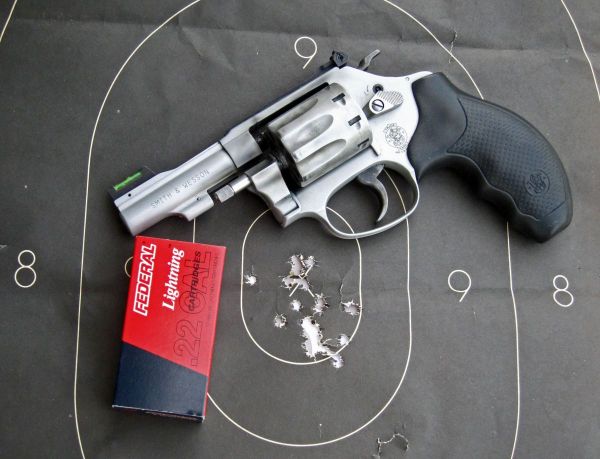
To improve your hard skills, do an assessment exercise. Take abundant notes, make images of your results on target. Find out where you’re lacking. It’s most often precision or speed.
When you find that, work on that aspect and work it out. Research it – everyone now has that capability. Don’t worry about finding bogus information. If you try something and it fails, you still learn something from it – and you may find the key to improvement.
As to doing it, I sometimes gear up with a mirror-image two-gun rig to shoot some drills with the dominant hand and repeat with the other hand. I work some with smaller pistols seeing how close I can hold to the standard of larger pistols. At times, there may be a revolver used on a course based on semiauto pistols.
Some of this could qualify as range stunts, but I believe I learn something with each press of the trigger, with each draw and each reload.
Let’s get out of our comfort zones.
– Rich Grassi