
“In my day,” as the old folks (me) tend to say, we had service size handguns and hideout guns. There was little in the way of “just right” guns. But back then, the load out for a uniformed copper was 18 rounds – six in the holstered revolver with 12 more in loops, dump boxes or – later – in speed loaders.
Speed strips came along and some cops added a tiny gun worn concealed, for emergencies.
It’s not that way in this enlightened era, where firearms ownership is mainstream and carry of firearms approaches being mainstream. Now guns come in an array of envelopes and cartridge capacity limits.
Having explored the smaller, extreme deep concealment pistols recently – which followed the service/service-compact (larger) pistols, it’s time to see where we’re at with pistols that are smaller than service-compact size (think S&W M&P9C/GLOCK 19/Ruger RXM/Springfield Echelon 4.0C-class pistols) yet larger than the truly micro-compact guns (Ruger LCP/Kel-Tec P32-class).
That class began, it could be argued, with the SIG P365, though the advantage, if any, was of a moment. There are other examples now.
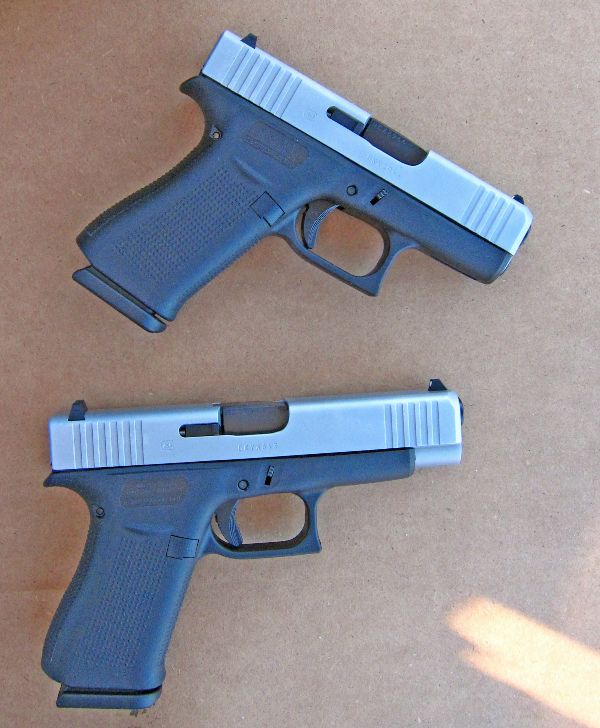
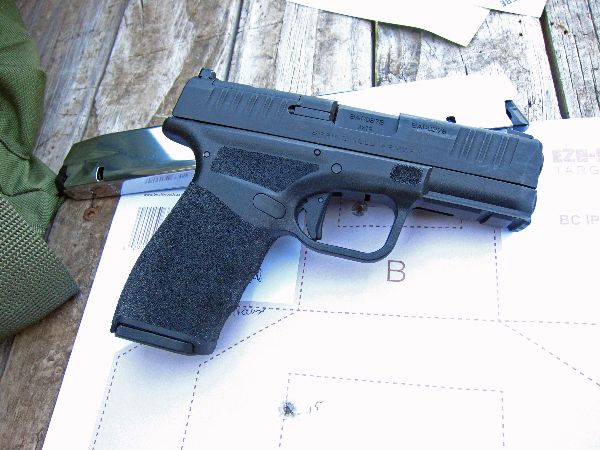
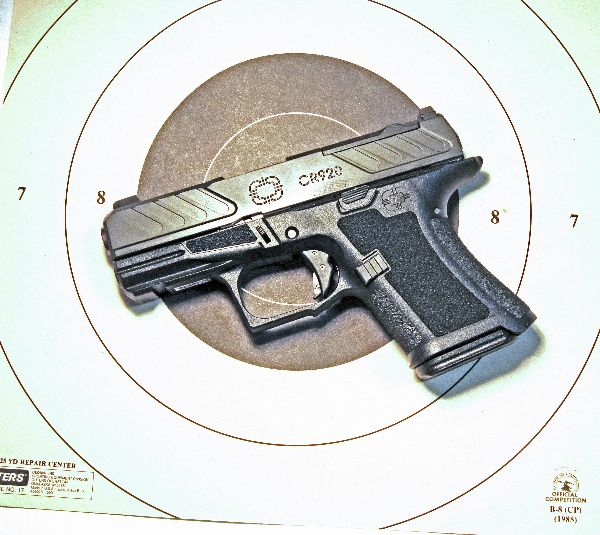
One pistol that fits the bill is the GLOCK 43X. The slide is the size of the micro-9 G43 but with a slightly longer frame/magazine. Another is the Springfield Hellcat Pro. Others come from makers like Ruger, Smith & Wesson, Canik, Shadow Systems – to name only a few.
Where do these things fit in the personal defense plan?
I’m currently carrying the G19 Gen5. That’s been my go-to since 2019. I’ve dropped back to the G43X, in its 10-round format, when required by discretion, medical necessity or maintenance of the G19.
It’s smaller and, due to the lessened capacity, lighter. The relevant part of the size is the width; if you lay it atop the G19, you see the older gun’s barrel/slide length is a bit longer. Otherwise, the guns fit that same envelope – except for width.
I first shot the micro-gun type at SHOT Show, the year of introduction of the SIG P365. I shot it next to the P320 Carry. At the time, I concluded that I’d rather carry the smaller gun all day, but the larger gun was less fatiguing to shoot.
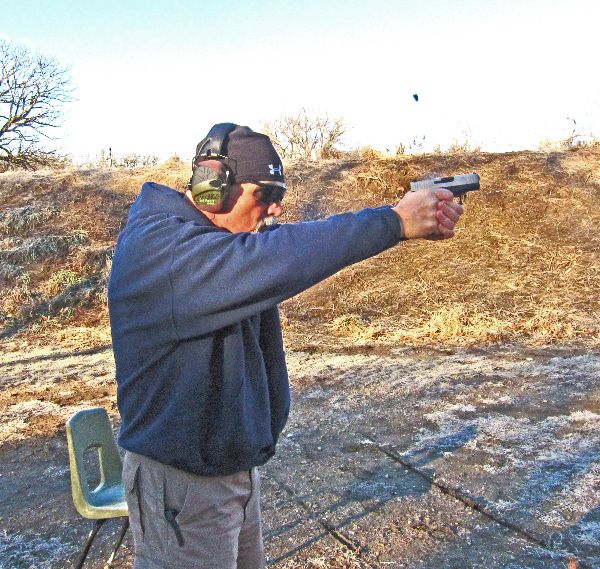
As the gripping surfaces of micro-9s got longer, the fatigue factor diminished. It’s like shooting the “baby GLOCK” (G26) next to the G19 or G17. It always took me longer to shoot the required strings of fire for the agency when I used the smaller, shorter-gripped gun – but I shot it noticeably better than the compact-service gun it derived from. That was due to not being able to “mail in” my grasp on the pistol.
It took more effort to “hold it right.”
With the G48/G43X, the Hellcat Pro – and likely, I imagine, the CR920X (instead of the original, shorter CR920) – I can shoot it like a compact-service – except –
It’s still slower. While shorter, lighter slides should recoil less, the fact is that the weight of the gun/ammo load-out do make a difference. That time is consumed on dragging the muzzle back to center.
Is it enough difference to make a difference? – That depends.
Remember the cases of Faris Jones and Arlene Beckles; both NYPD, both off-duty, they had snub, five-shot revolvers. Both service members emptied their guns and, in both cases, the offender(s) were still mobile thereafter. Had either of them been armed with the 11-shot mini-GLOCK (or an analog), they’d have been in better shape.
That’s where these micro-9s make the difference. You can carry them all the time, for all practical purposes. And they’re serious hardware.
How well can they stack up on standards?
We’ll take a look at that.
– Rich Grassi