
Is it really “either-or?” Procedures are the step-by-step “book” answers to any situation; a bit unrealistic for the world in which we find ourselves. Variables confound the orderly, obsessive-compulsive adherence to “everything has a place, everything in its place.”
Add to this the concept if your procedures aren’t based on sound principles, you must reassess your decision making.
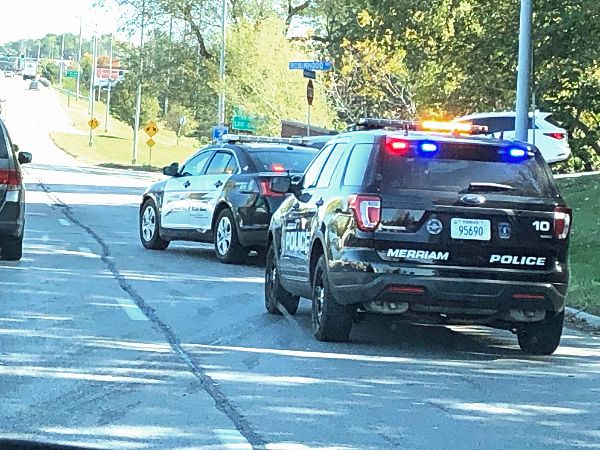
Use the example of a car stop. When stopping a violator, do you just turn on the flashing lights, get them to pull over, then wander up to ask for license, registration, insurance? Then when you get back to the car, call in the stop on the air or log it in otherwise, and play on the MDT – or however you children do that these days?
When I hired on to my second major police job, I was instructed how to call in a car stop. They had a procedure.
It was location, then vehicle description, then plate, then a description of occupants. It sounded a little like this:
“38 stopping a violator.”
“38.”
“4th and Pine, a tan Chevrolet 4-door, Adam-Boy-Charles-1-2-3, one male occupant.”
“238.”
In the example it was “who” (your radio number), “what” (car stop), “where” – location, vehicle description (first), tag (second) and description of occupants – as best you can see.
Why that procedure? Well, if you got killed, they had an idea where to start looking for your body and witnesses, what vehicle to seek (even if the plate was pulled off or changed) and some idea how many people and what kind of people are in the car. It may assist in the eventual apprehension and prosecution of your attacker.
You still have to exercise due care, but you got it all out on the air – before turning the lights on.
You understand that unwitnessed property crimes and violent crimes committed by offenders against people they have no association with were the hardest crimes to solve, right? Making a person of this description, in a vehicle of this description that (at least at one time) which had this particular registration plate on it and appearing at this specific location, could be helpful in after-the-fact prosecution.
Now we have dash cams, mobile data terminals, badge cams and GPS on the cars – even the availability of the “ever-popular” license plate reader technology (/sarcasm) – but it’s still a plan, even if your technological marvels fail to function.
Things happen.
I used that method, but my addition was calling in all in before ever notifying the violator that he was being stopped. I mentally predicted where he’d stop – it didn’t really matter as all the relevant information was on the air and I could update location as needed.
That way, I’m not in my car, at the side of the road with a violator, trying to unbuckle, call it in and look out for approaching traffic all at the same time. It gave me time to observe.
Time, I had. When there’s nothing but air between me and potential incoming gunfire, time was a valuable ally.
In terms of procedure, we’d gotten into “if it works once, put it in the manual.” That’s a bad idea because no two situations are exactly alike – and the opposition gets a vote.
With principles, we fit the approach (or non-approach) to existing – and sometimes quickly changing – conditions.
An example of a principle is “be predictably unpredictable.” Everyone who knows you should know that you’ll be where you’re not expected to be in every situation. If they expect you to drive up to an address in response to a call for service, don’t do that. Consider walking on the diagonal in your approach to a residence – instead of straight along a sidewalk -- or approaching from the back of the residence.
In the pre-mobile phone days, I’d sometimes have dispatch call the reporting party to ask to meet me outside the residence.
It gave me a chance to assess the situation without placing myself into the potential battle space.
Procedures, when they’re specific to a range of potential scenarios, and can be done safely are fine. The principles that form the basis for procedures are gold dust; they allow you to adjust, adapt and accommodate.
– Rich Grassi