
Well, not really. After posting a story about placing new fixed sights on a pistol adaptable to use of an optic, I innocently noted that the point-of-impact was higher than my point-of-aim. In some places, such a zero is desirable and no, I didn’t mention Europe.
I received a missive from a reader who noted that it was an undesirable state of affairs and I shouldn’t have to endue such aggravation.
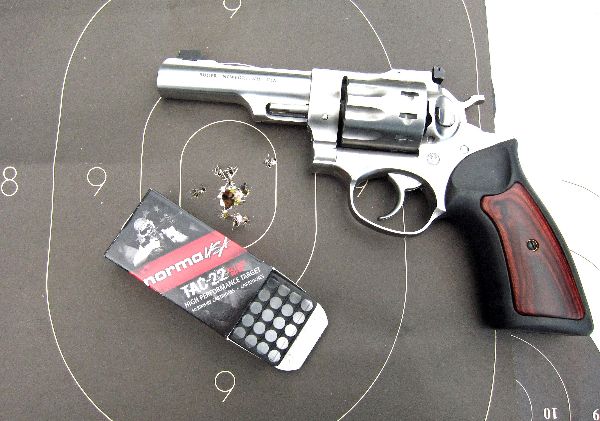
He went on to explain the use of sight math calculators (like on Brownell’s or Dawson Precision) and use of a file.
Obviously, this is someone who knows shooting. His response was cogent, concise, well-composed. I’m not complaining about it, though there are a few points to consider.
First, when I receive product to evaluate, I do that and report the results to you, our loyal readers. In that way, you don’t have to note: “Oh, great! I’m looking for sights, have no idea what to expect and just want to know what happened. If it’s within my range of error, great. If not, I’ll keep looking.”
The next thing is that I wasn’t doing a tutorial on how to get adjustment on fixed iron sights; it may not be a bad idea. If you have some skills in that regard, along with a camera and some writing skills, I’ll be happy to give you a little space.
Then, there’s the fact that some of these guns – and, perhaps, these sights – will be going to agency purchasers. If you’ve not read typical agency policy & procedure (please, not “General Orders” … those who insist on that tend to be 4F), they’re reluctant to let others hammer and file on agency hardware.
Something about potential liability versus ham-handed use of a hand-grinder.
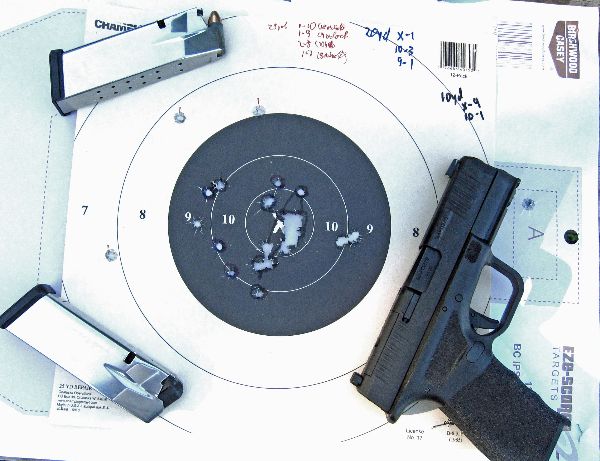
If you adjust the zero on a handgun with fixed sights permanently – a hard zero, say at 25 yards – what happens when you have to shoot at five-feet to 15 yards? Where does it hit from fifty yards?
It’s all a compromise. Once you see where a gun is hitting, files are less the answer than shooting with duty ammo at various distances to learn your hold. That said, if you can live with known distance, get out that internet and the tools so you can get after it.
Finally, something I learned a bit about was eye fatigue and the utility of guns that hit a bit high to the sights. If you have to use a 6 o’clock hold on a target, that gives you some vision of the target and surrounding areas. Something in that view – an idiot wandering into the line of fire, the offender throwing his (empty) hands up, etc. – could induce you not to shoot, a good thing.
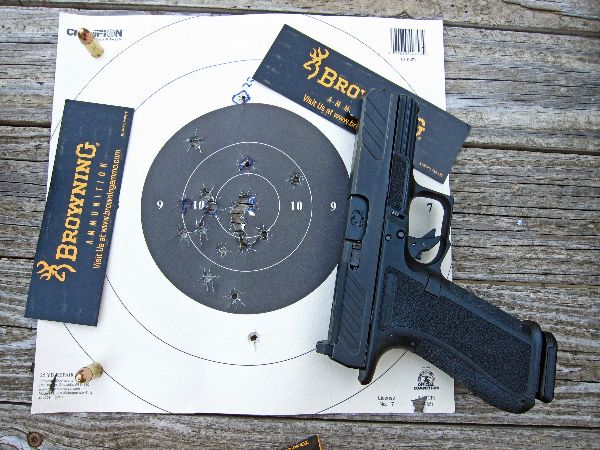
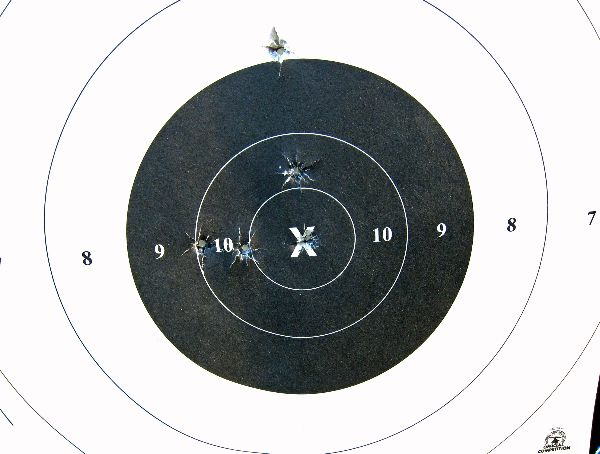
If you’re shooting bullseye, a 6 o’clock hold gives you that bright line mark, that contrast that minimizes visual fatigue. I get this from Paul Howe: on a battlefield, if the opponent is prone behind his rifle and you hold where the shooter meets the ground, that 3” increase in point-of-impact smacks the brain-housing group.
That could well prevent the need for further unpleasantness.
Still, having a hard zero – not knowing your hold – is an advantage in known distance work. Knowing your hold gives you some advantage as well, regardless … but I could be wrong.
I’d prefer the rounds hit over the sights than under.
I also like to get reader mail as it helps me think through the issue. Many thanks to my correspondent.
– Rich Grassi