
People did that in Twin Falls, ID. It’s not normal – or wasn’t – for people to run to the gunfire, but it apparently happens in some places.
Everyone talks about the “FiveSeven” responder and a few wonder who the responding off-duty trooper was, but there’s a single news report that gives us some important lessons from someone else who was there.
Before we get there, make a note of this: This is not a criticism of the individual who bravely responded – in fact, ran – to the sounds of rifle fire at a drive-in fast-food place in Twin Falls. He’s paying a large price for decisions he made. He’s paying, so you learn from it.
Got it?
According to the story:
A third man, Austin James, a former police officer, also ran to confront the shooter. Although Mr. James was armed, he initially — and intentionally — did not draw his weapon, he said. He had feared being confused for the gunman. When Mr. James rounded a corner, he encountered Mr. Williams, who shot him in the upper arm, shattering his bone and severing an artery.
“He didn’t say or do anything,” Mr. James said in a text message from the hospital, where he has been since the shooting. “Just had a blank stare on his face.”
Once wounded, Mr. James said he drew his gun and tried to fire, but his gun was without a round in the chamber. He said he was trying to chamber a round when his wife and her friend — both emergency room nurses — found him and pulled him back to the car, where they began to treat his wounds.
(NY Times via SHOOTING NEWS WEEKLY)
Now there will be some who will criticize his rushing in without gun in hand. To do that is to fail to consider the urgency and the other-side potential risks: getting shot by a “good guy.”
Is it better than being shot by the offender with the rifle … when he could keep his rifle running?
I can’t say I’d like it any better. Are there ways to mitigate the risk?
Perhaps, but the time for us to consider it is now. The time for Mr. James to consider it was “several weeks ago.”
The problem of “blue on blue” shootings in NYC was considered decades ago. In a strictly infringement riddled city, there were around 13,000 municipal cops and that number didn’t include staties, feds and other armed law enforcement types. It was such a problem that Jim Cirillo was one of the people working on solutions.
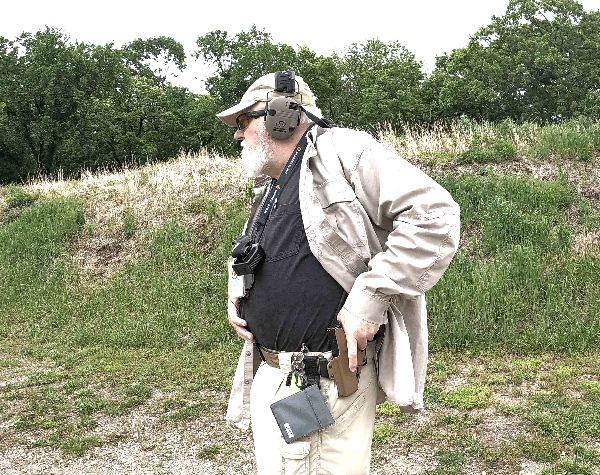
It’s still something to be considered today. The ‘halo effect’ – “everyone can see I’m a good guy” – is still a problem. Considering a covered low ready (hand on the holstered gun), various postures for cross-draw and shoulder rigs – and not rushing into the gunfire but making a calculated approach – may buy you time.
Even better, something more visible, like a DSM Safety Products banner, could take some worry out of getting that gun in hand earlier. Just making another responder pause enough to figure out what you are helps.
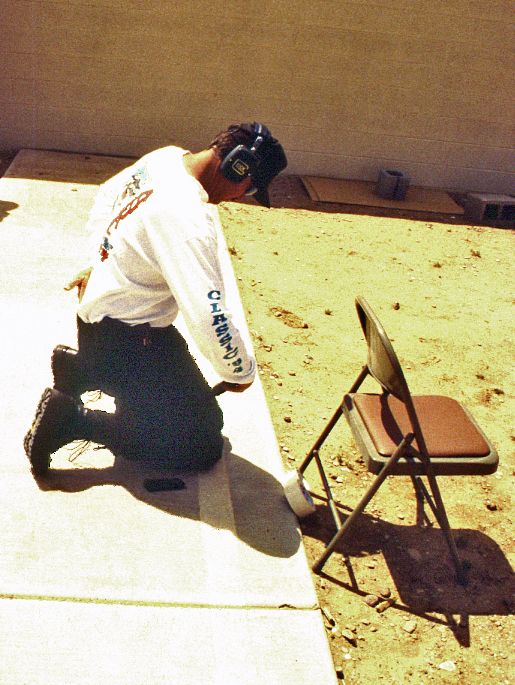
As for the “gun … without a round in the chamber,” I’d add my voice to those decrying what some still refer to as Israeli carry. If the gun you have is prone to shooting by itself, unload it, put it in the safe and take it out for range carry.
Also, learn how to clear stoppages one-handed.
How does that help?
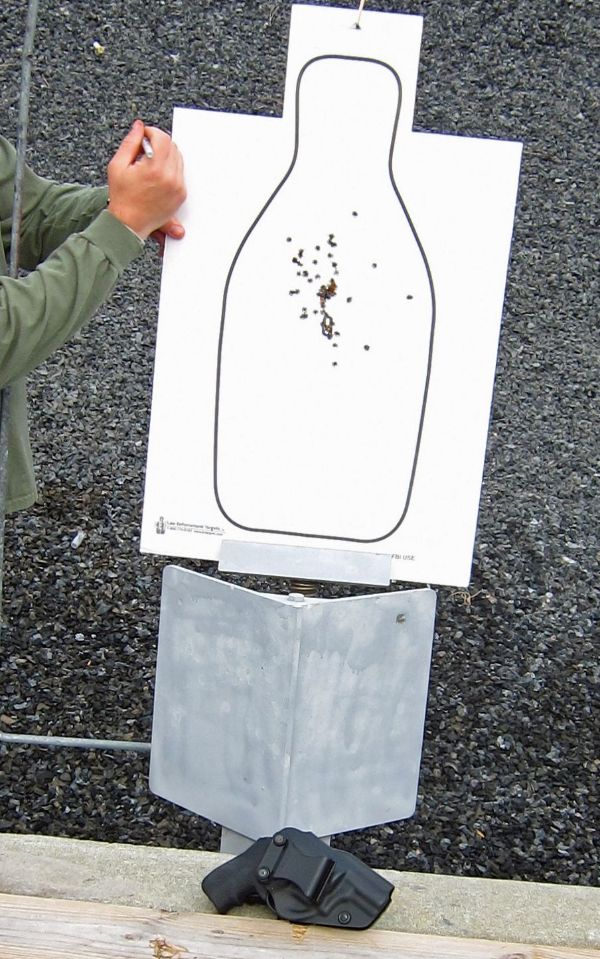
A pistol without ammo in the chamber will cause you to experience a “stoppage in the cycle of operation.” Clearing it one-handed is a thing.
Load all the way up, by all means. But take this opportunity to learn from the misfortune of the brave Austin James. He put himself out there and bought time for other citizens.
Not learning from his misfortune is disrespectful.
– Rich Grassi