
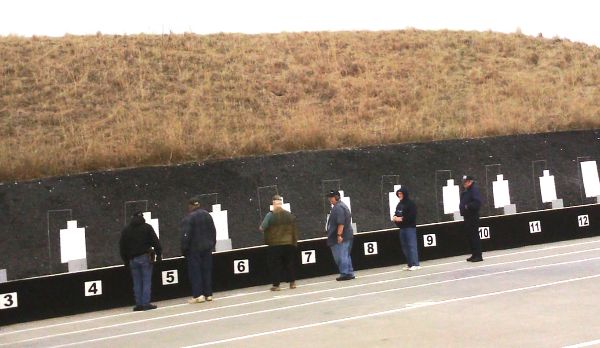
Are you in a state where a law enforcement training commission doesn’t mandate a course of fire – or has certain guidelines, but happily leaves liability to the individual agency?
Or do you want your outfit to exceed state mandated minimums and deliver a higher level of service to your community? Perhaps you just want periodic range training and you (mistakenly) believe that shooting a qual course is the same thing is training.
Fear nothing; I’m here to help you figure out how to compose a qualification course.
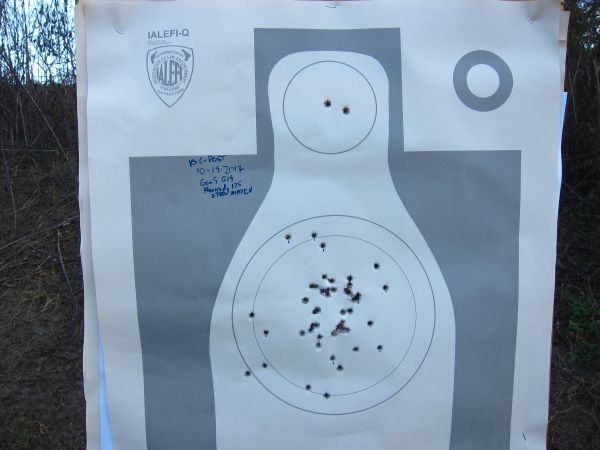
The issue arose when I was researching scoring dimensions on an NRA qualification target and I found this comment – which I’ll paraphrase –
His general rule was using a “15/70/15” distribution to determine if the qual was “right” for his group. 15% should complain it’s too easy, 70% should think it’s fine and 15% should complain about the difficulty.
He figured that about 85% should pass on their first attempt. If the failure rate exceeds 15%, perhaps it is too hard. Conversely, if less than 15 % fail, it’s too easy.
The commenter goes on to explain that it doesn’t end there; as shooters improve, he makes adjustments to keep the normal distribution in play.
It must be nice.
It’s also noted that “… the 15% that think your course is too hard will always think that. Nothing you do will make it easy enough for them.”
The writer notes that he doesn’t give up on them, but continues to work to ensure their skills – along with the rising tide – keeps pace.
Sounds like a potential candidate for sainthood.
Gunfight training isn’t shooting a target course; we do the ‘accuracy test’ as a single component of a complex use of force structure. It’s essential; if you can’t safely work with firearms and hit a mark at distance, none of the rest is worth doing. I question whether line drills are the way to record that competency.
Once this basic level is achieved – and sustained – I’d recommend actual training, as long as you sustain the marksmanship/gun handling side of it. Using the IALEFI Safety Check that organization uses for ensuring conference participants are okay for live fire classes – and documenting individual performance on the safety check goes a long way to making sure your people are safe on the range and on the street.
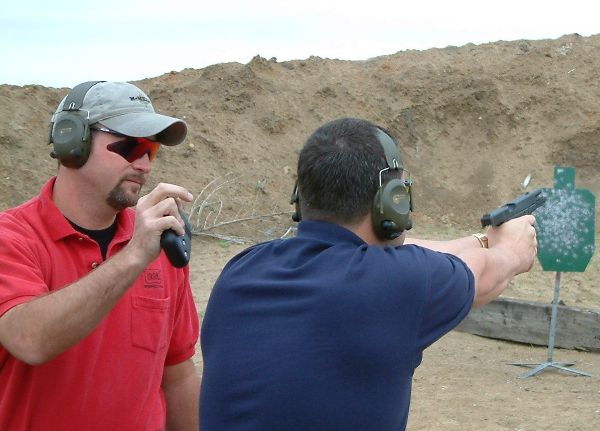
The qual we used in the transition course was a simple accuracy test. The critical bit was the Standards, performed and document individually, which included the following:
- Load – includes placing the gun in the holster safely and securing it.
- Draw to a single hit.
- Stoppage – fail to eject (clear and fire two hits).
- Stoppage – fail to extract (clear and fire two hits).
- Turns – Right
- Turns – Left
- Turns – from up-range (each includes a draw to a hit).
- Movement with gun in hand.
- Six hits from low ready (muzzle averted into the ground ahead of the target).
- Unload – includes visual, physical checks for condition.
You can determine your own standards.
That’s not the qualification; it came after and was a simple accuracy test. You do what you think is right.
And while someone can miss a target in training, during the qual a miss should be a BOLO. The qualification is a test, not practice. If you throw one off the silhouette, that run was practice, not a qual. The qual is when no round leaves the silhouette.
What should be a standard of performance be for the cops on our streets? I saw a social media post recently where an agency, in recruiting, carefully noting that gun experts were not required; no champion class gun handlers do they recruit, just someone who fills a uniform.
I’m not sure your citizens would agree, as they, along with their children, relatives, neighbors, home and property comprise the backstop for “missed shots.” Perhaps they’d like something a little more comforting when the lights go out.
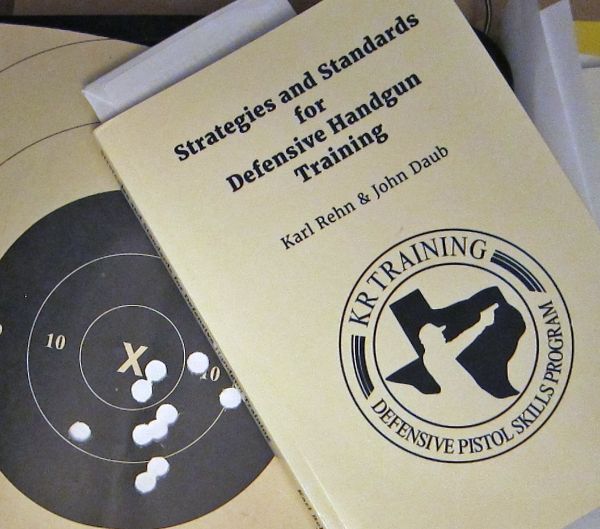
Still feeling lost? There are standards and qual courses all over the internet map; you could seek help in the text by Karl Rehn and John Daub, found here. State courses abound and you can see various “gun-tube” types shooting some of them. Take what fits, excise the rest.
– Rich Grassi