
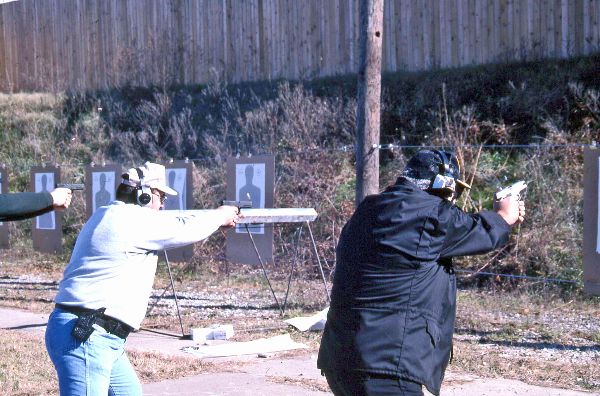
A discussion of “soft” skills and “hard” skills is appropriate as we started from tactics for the plainclothes/off-duty peace officer here.
A comment from a news digest (to which you can subscribe here) said, “Without saying so in as many words, Rich points out that what most gun owners consider training assumes that all problems are shooting problems. In the words of Abraham Maslow, “I suppose it is tempting, if the only tool you have is a hammer, to treat everything as if it were a nail.”
He’s right.
In that previous feature, I’d noted that a robbery-in-progress scenario was solved by an officer-participant without firing a single shot. Everyone else “shot the bad guy.”
Their answer wasn’t the wrong answer – but wasn’t his potentially the better solution?
Not all personal protection encounters are shooting problems; to the contrary (and, thankfully) nearly no personal protection situations are shooting problems. That’s a good thing. But, if an encounter forces a defender to use deadly force, “misses” can’t be tolerated.
If you can navigate the situation without resorting to force at all, that’s good. Better: stay away from conflict scenarios entirely. Some you can reasonably predict, like the “stupid places, people, activities” proscription by John Farnam. Others are not that extreme, but can involve crowds, high crime locations, social use of intoxicants and the like.
In the hierarchy of personal protection, avoidance is best – and it’s something to be practiced. Next is escape and evasion – simply get out of it as best you can, as long as it can be done safely.
Planning and awareness are components, as well as considering situations you read about, videos you see (dramas or actual events caught on surveillance cameras), and stories you hear others tell. Consider what happened that forced the defender into having to use force.
It’s mental rehearsal. To look at a “hard” skill analog, precision shooting; it’s largely a game of intense focus and rehearsal, not just making noise putting projectiles somewhere onto a backstop.
It’s the same with situational dynamics. Seeing what has happened to others – whether fictional in dramas or actual, in various video from badge cams, dash cams, surveillance and security cameras and lookie-loos with their phone videos – can help you prepare.
Just as dash cam videos provided a wealth of rehearsals for potential motor vehicle accident situations: you see what can go wrong, what did go wrong – on a video. Later, when driving, you find yourself slowing down early “because I’ve seen this before.”
As to hard skills, that’s marksmanship. Not every problem is a shooting problem – most aren’t. But if it comes to that, you have to know that you can absolutely make that shot, 100% sure, before you press the trigger. You do that by learning from misses on the range.
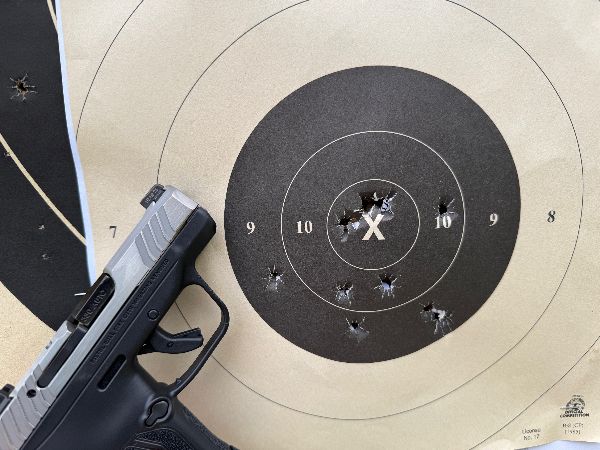
You can learn that by doing a “walk-back” exercise, seeing how far back you get before you pull a round off that preferred scoring area.
Shoot targets smaller than you prefer, shoot from distances that are at the same time unlikely to be faced in reality and uncomfortable. Find your failure point on the range.
Don’t find it out in the real world.
– Rich Grassi