
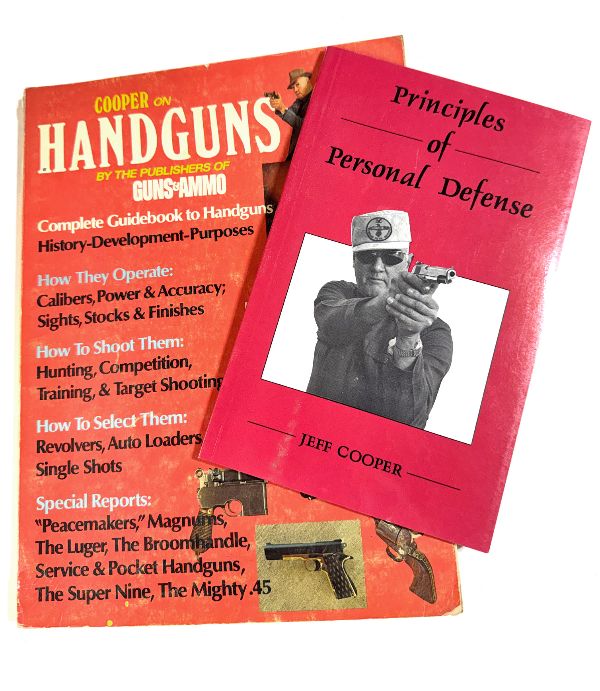
Recently a pair of commentators opined that Jeff Cooper’s color code has nothing to do with readiness or awareness.
They make the point, and it is true, that the color codes were meant as a system to lessen your reluctance to use force. The aim is to be conditioned to appropriately respond to what appears to be a threat to safety.
However, in Cooper’s own words it appears that the color included awareness as a component in preparation to do battle. For example, he noted that you may be forgiven for losing a battle but you may not be forgiven for being surprised. The implication is that the color codes are based on awareness.
He went on to say that in Condition Yellow, one can be compared to a patrol craft on the surface of the ocean. He said that it’s like having a radar dish scanning 360 degrees all the time looking for potential threats.
That’s as clear a statement of awareness as he could make.
Cooper also typified Condition Yellow as a state of relaxed alert. As a note to cardiologists out there, he said that you could stay in Condition Yellow the rest your life with no negative side effects. It’s just a matter of observing the world around you and always looking, always being prepared, always being aware when you’re around people you do not know.
This in no way negates the remainder of the message of the two commentators. As to lessening the reluctance to use force, that is absolutely the thrust of mental conditioning for combat.
Jeff Cooper told me, on two occasions, that his inquiries demonstrated that people who won gun fights weren’t those who always shot the best scores on the range. Instead, they were people who could think when the emergency was in progress.
Too often, we’ve taken hard-learned lessons, reduced them to mnemonic devices -- reminders, a short-hand way to remind students -- and had that effort reduced to making the entire lesson a phrase, a bumper-sticker slogan.
That’s not the point of it. The point is to get people home at the end of the day. To do that, we illustrate those scenarios where good people lost – and, properly, won – surprise engagements. A way to win is not to be surprised, but to express a world-weary sentiment: “oh, no … I knew this could happen.”
To quote the master, “If you are attacked in Condition Yellow, you will probably win, assuming that you are armed, awake and aware.” (Emphasis added, quote from Jeff Cooper’s Commentaries, Volume 13, No. 1 January 2005)
It’s good that the current herd is going back to source material, but be careful not to cut too much off. The point of Cooper’s Color Codes is to be ready to take action when that’s necessary. But when you suspect a problem early, before it can develop, the planning stages – examining alternatives – is ongoing before the fight starts.
Trying to plan a fight during a fight is multitasking you don’t want to try. The more you can look at an approaching potential problem before it arrives, the more chance to assess an exit strategy.
The best fight is one you never attend.
– Rich Grassi