
Last week, the question of “lots of ammo” or “bigger caliber” was reviewed here. Surprisingly, there was some controversy over the piece on social media.
A well-considered response dealt with a single aspect of the piece: “Of course, the gun’s maker or caliber isn’t really all that important. The point is it’s proven itself to the user.”
One area of disagreement: “maker and caliber absolutely matter.” The apparent concern was “… poor engineering, inconsistent manufacturing, inadequate terminal performance, or durability issues.”
The comment continued explaining the reason that institutions spend time and money in evaluations of guns and ammo pre-adoption is that the handgun “… is a life-support system.”
True. There’s something to the extremes that institutional users go to in adoption of firearms and ammo – and it’s a reason for us to copy them, within limits.
In a later comment, some problems with an agency’s procurement decisions, based largely on the process used by another agency without examination of the environment in which the guns would most likely be employed, was explained.
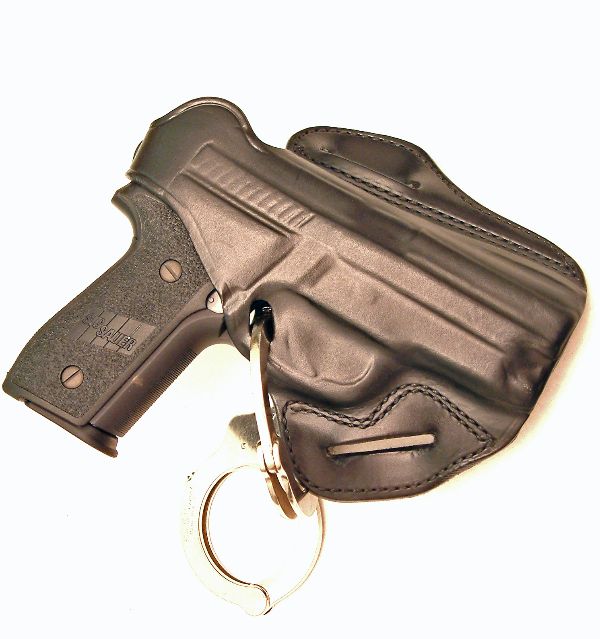
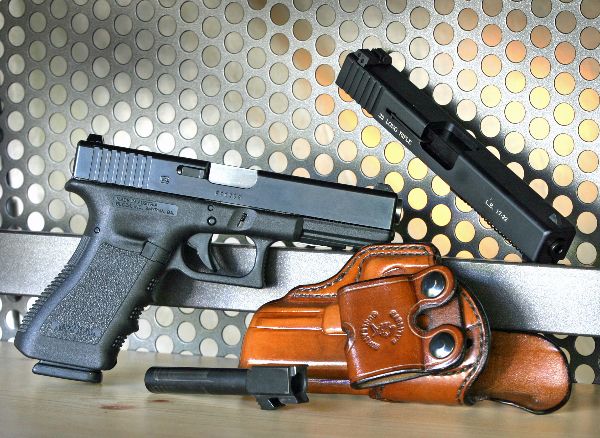
That life support system, used in a constrained environment, by people who required not only extreme precision but more-than-LE-average-speed of employment, was changed to something that didn’t address those issues.
So much for agency evaluation procedures.
Still, choosing a near-mil standard sidearm makes sense from the perspective of reliability, durability – and, if you can get it, ease of regular maintenance and repair – makes a lot of sense.
Another issue, let me know if you’re surprised, is that “caliber makes a difference.”
If I’m buying it, yes. If the agency is buying it – with my money – likewise – but only if efficacy isn’t affected.
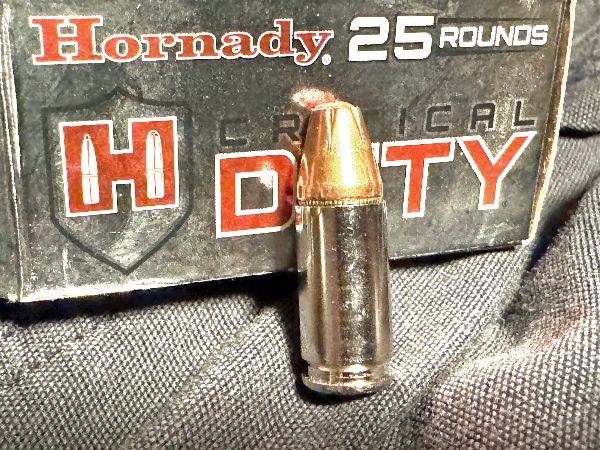
The FBI went to lots of time, trouble and effort to “make a silk purse from a sow’s ear.” After toying with larger, harder-to-shoot guns, settling for a “middle ground” (that wasn’t at all bad), their ballistics standards put manufacturers in a place where they just had to make the 9x19mm penetrate, expand and be “barrier blind,” so people could have a gun they could shoot well.
It’s a remarkable story in engineering and manufacture – even though my concerns center on a round’s ignition reliability, functional reliability and hitting to the sights. That can be accomplished with less expense.
But it’s not that much less and why quibble? If the first three standards are met by ammo that meets the FBI’s standards, choose that ammo.
If you are wrapped around the axle regarding caliber – “a bigger bullet puts down crazed attackers better” – and you really believe that, by all means, carry the bigger caliber.
But shoot it enough to be good with it. Same if it’s a 9mm, a 380 or anything else. A peripheral hit with any handgun round may do little more than waste time. If it buys you time – he’s surprised to get hit in the hand, for example – that’s fine. If it’s like 1986 in Miami (and one of those was certainly no peripheral hit), it’s not so good.
As one online commenter noted, the critical aspect is your competence and confidence – which are related. You pick, but be able to back it up with skill.
– Rich Grassi