
Carrying a gun on a regular basis should be more than finding the cheapest holster on the online version of the big box store or seeing what the influencer of the day is plugging. I’d expect one needs to consider aspects of the reality we face before coming to a decision.
I found this story in notes from 1989, practically ancient times --
I went to support a search warrant execution that another agency was conducting in our jurisdiction – and outside their own. While at the pre-raid meeting, I saw that the officer conducting the raid was in plain clothes. I saw him put on a nylon gun belt that carried a low-slung, flap covered holster.
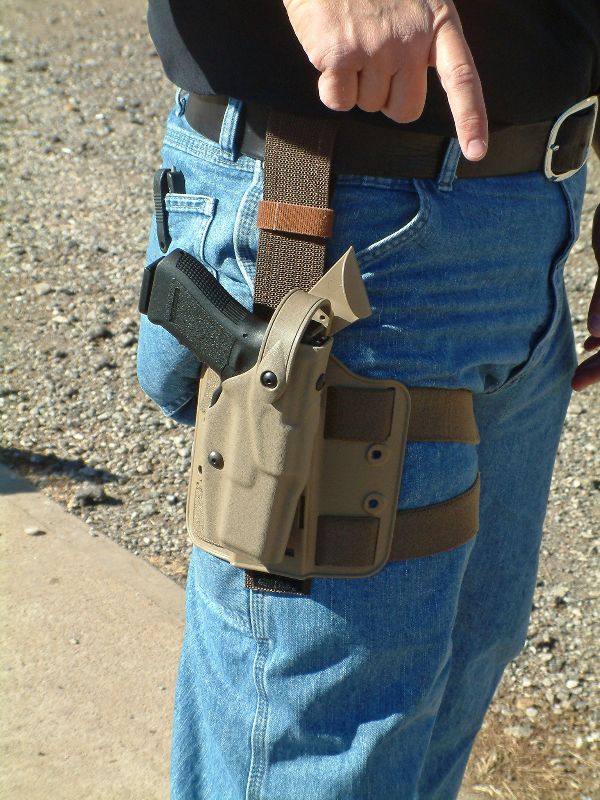
He put his S&W Model 645 pistol in the holster and we went to the party.
Later, after the scene was secured and the evidence gathering gear was broken out, I saw this same narcotics detective take his jacket off. Underneath he wore a Bianchi Scorpion rig, a horizontal shoulder holster with magazine pouches on the off-side shoulder. It is similar to the Galco Jackass rig and the Ted Blocker "Miami Vice" rig. He took the 645 from the thigh-slapping leg holster and replaced it in the shoulder rig.
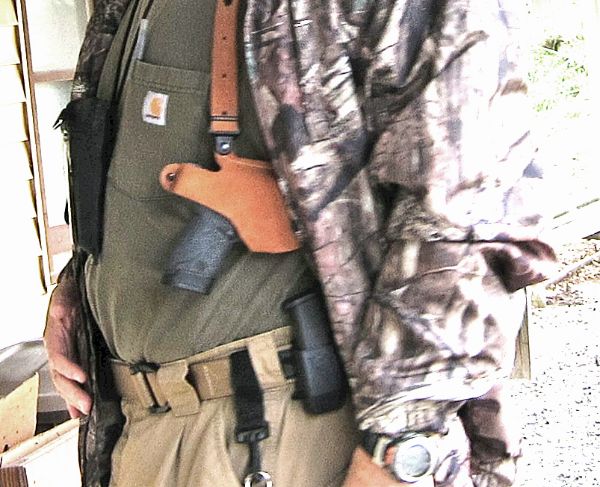
Realizing that it was bad form, I inquired as to what he was doing. He stated that the flap holster was his "raid" holster.
Being so low slung, it is easy for the officer to get to, he explained, but the flap was more secure than a thumb-snapped shoulder holster that points the stocks toward a perpetrator.
At the time, I didn't think much of his reasoning. At least he thought his particular holster problem out and acted on a solution.
On reflection, his solution wasn't bad, either.
I expect someone would play hell trying to get that pistol freed from that flap holster, though I fear the officer would, too.
He doesn't wear it on routine patrol, though, just for raids -- That is when the scene is crawling with other officers and when you start out with a pistol in your hand. After the prisoners are secured and the tedious work of photographing and diagramming the scene, and seizing evidence begins, the pistol goes back into its usual, and somewhat more practical (for him), home.
A casual reader and gamesman would likely scoff at the gun and ammo harness worn by the officer as simple emulation of the cops on Miami Vice. These holsters have their place, though.
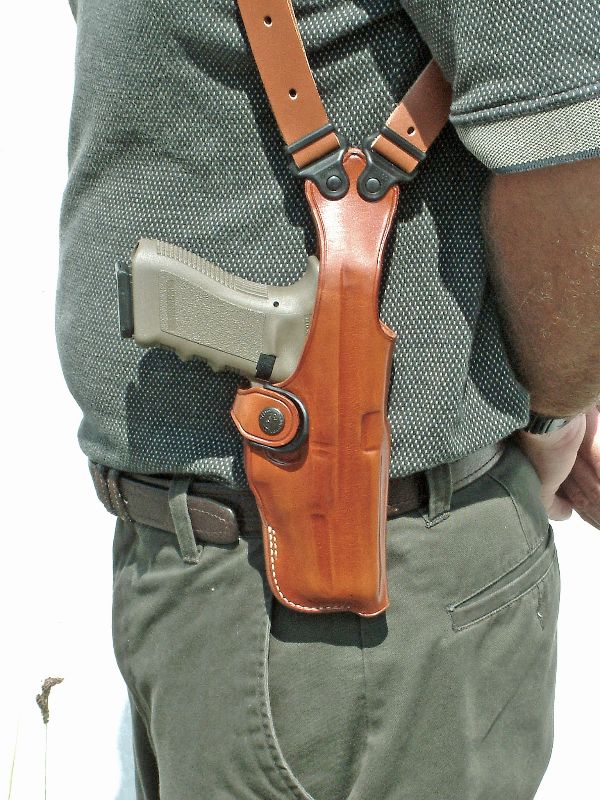
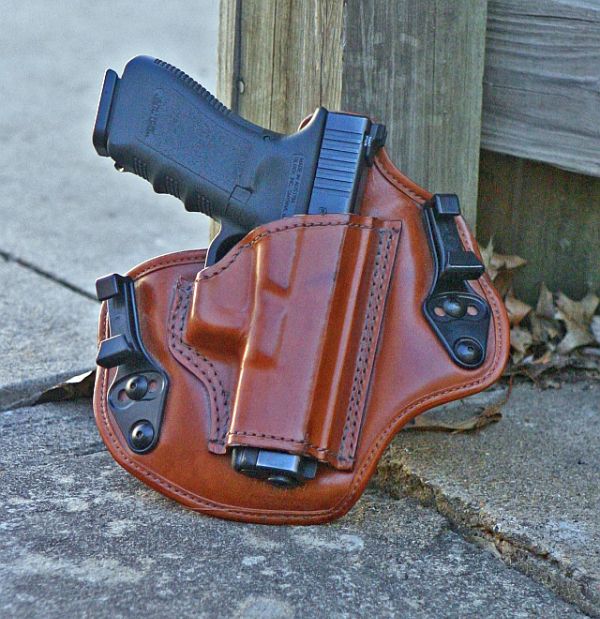
An instructor of executive protection recommended shoulder holsters in general for bodyguards. With the arms folded over the chest, the gun hand disappears inside the jacket for a low profile "ready" position with the hand on the stocks of the pistol. If it's good for bodyguards, it's okay for narcs who often operate in crowded environs. Aside from the ready position, the piece can be easily secured from casual "frisk" bumps and seizure attempts merely by drawing up the arms.
Another advantage of this type of holster, is that when you slip on a gun, the spare ammo goes with it. It is carried on the “wrong side” for real speed reloads, and that's better than carrying no spares at all. Sadly, too many folks carry guns and no extra ammunition. It's unlikely you'd forget it with one of these rigs.
The bad news? Well, you can't replace the gun in the holster with only one hand. It may not seem like a big deal to you, but try to hold down a suspect for handcuffing while replacing the gun in the holster. It doesn't work. That could be another excellent reason for the narc's "raid" holster.
Consider the tasks you’re likely to have to perform, then consider carry methods in line with that activity. And practice.
– Rich Grassi