
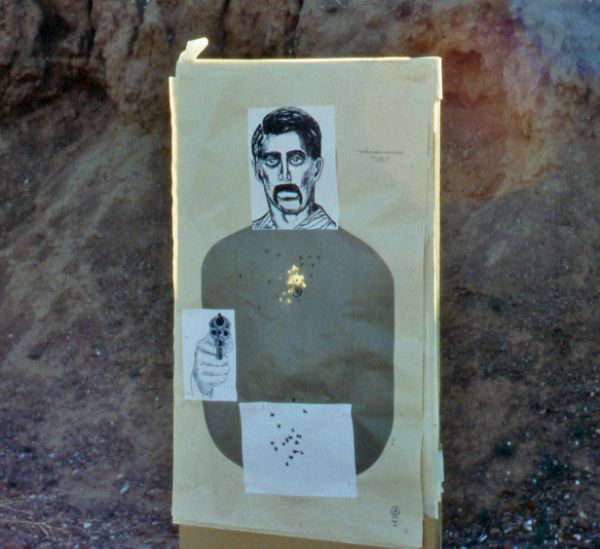
In a feature last week, Reality Check: Spreading Out Your Rounds, a piece from OWDN affiliate Shooting News Weekly, the fallacy of tight groups on a qual target meant you’re shooting too slowly, too precisely, was raised.
An affiliate misstatement is “Miss one in qual or the jury will expect 100% on the street.”
In a piece – “The Dangerous Myth of “Not Shooting Perfect” on Qualification” – the author addressed the issue of perfect qual scores amounting to self-incrimination.
“See, you missed one in a gunfight, but you never missed on the range!”
Think that would ever come up in a trial context? Maybe – it’s easily dealt with and would make me look for the real issue they intend to raise – but I’m not aware of it being a thing. It sounds more like an excuse for those who can’t clean a simple LE qual course because they won’t apply themselves to the problem of “checking that box.”
The author notes that the qualification shoot, even in lousy weather outdoors, is still a controlled environment compared to the single-wide trailer at 0300 during a drunken family fight when one of the participants snaps and charges with a kitchen knife.
It’s not at all the same.
The qual is seeing what you’re capable of doing in the sterile conditions of the range. In the same sense that I’ll shoot walk-back drills seeing how far I can go back with 100% hits on target, no misses, 100% of the time. That gives me a baseline of hard skill – precision.
As the author of the piece noted, past performance (a qual score) is no indication of future real-world performance.
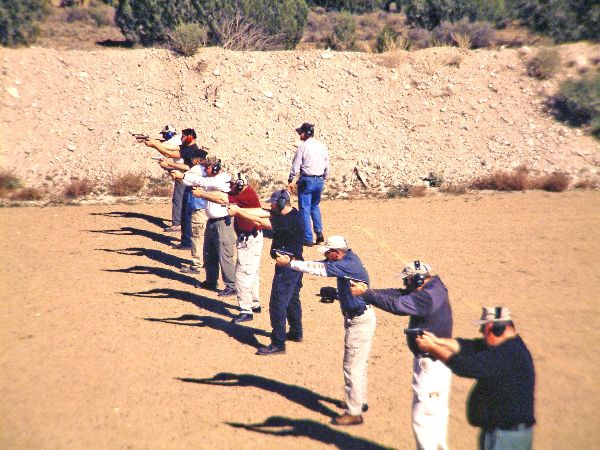
It’s the floor – the most we can expect of you under “near-ideal conditions.”
Par times are used. Consider this: can you perform this series of tasks in this much time. Put in range terms –
From 10 yards, draw to four hits in five seconds.
The expectation isn’t that you’ll push to make four loud noises in 1.9 seconds, with 3 hits in the center and one off the paper. The only thing in the record is the number of hits at the end of the course of fire. That’s the artifact that will be reflected in the record.
If you took 4.8 seconds and put four bullets into around two-inches in the center of the target, some will say “you shot too slowly.”
As Ken Hackathorn points out, when it’s real on the 2-way range, no one will have to tell you to shoot faster. You’ll wish someone was there to tell you to shoot better.
World War II Marine veteran, lawman and writer, Charles A. Skelton noted that “no one died from a quick noise.” I wouldn’t put it quite that way, but he made the point. Bill Jordan, another WWII Marine vet and a Border Patrol veteran, said “Speed’s fine. Accuracy is final.”
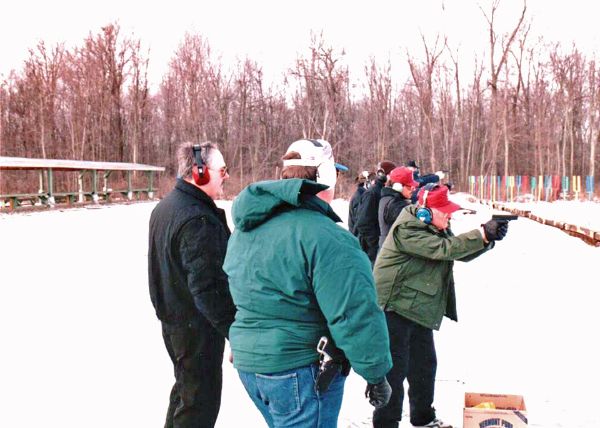
Does that mean that you should do nothing but old-style bullseye shooting? Well, in my view, I’m not sure it’d hurt – but you do need to know how to run the gun at speed, how to assess effects on target in the moment, and know when to stop shooting.
Just like you need to know when to keep shooting.
Paul made good points in that piece from SHOOTING WIRE. Herfel Torres made good points in the Not Shooting Perfect piece – and backed them up with the law.
Qualification is the reality administratively, whether I like it or not. The best way to handle it is to remember your task when called to qualify: do your best.
Later, I’ll tell you what I’ve learned if I’m writing the qual course – as a tool for collecting evidence for court, should it become necessary.
– Rich Grassi