
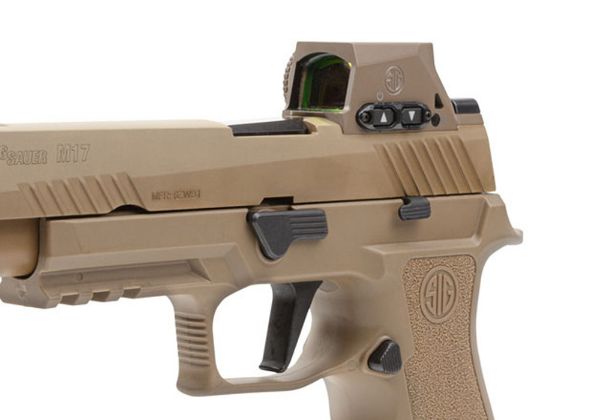
The age of pistol-mounted optics actually originates from an earlier era, long before microelectronics, LEDs and the broad use of tritium in sights. In the early days, tube optics – telescopes mounted on handguns, nearly all revolvers – were rarely seen.
It seems that the “wobble zone,” that natural arc of movement when trying to aim a firearm, was visually magnified through an optic – whether it’s magnified or not --limiting the appeal. The durability, weight and size were likewise problematic for handgun optics.
No more. Now electro-optics, non-magnified, are small and have some amount of durability. Loosely termed “red dots,” pistol-mounted optics are available in an array of sizes (of the sight and reticle), a couple of dot colors, and open- or closed emitter types. They feature light weight, long periods between battery changes and many don’t require removing the sight to change batteries.
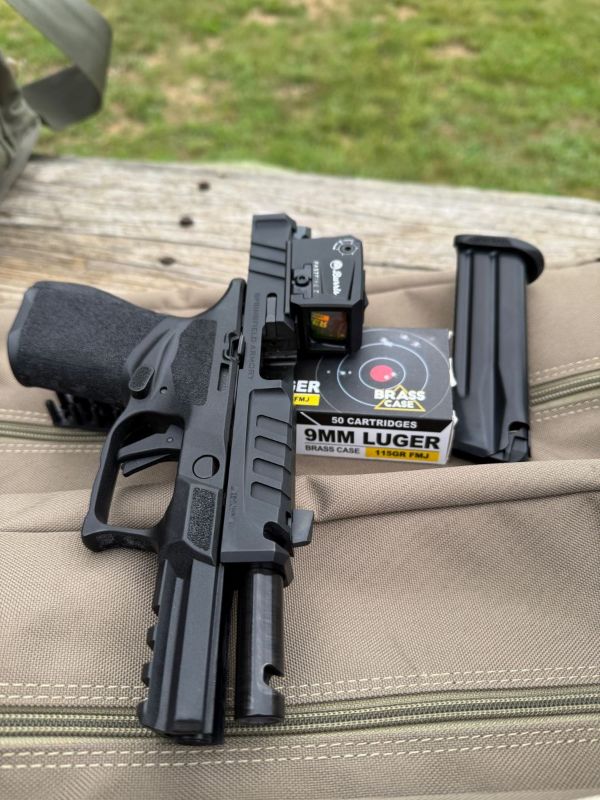
Gone are the days of “equal light, equal height” referring to sights we considered good. Now it’s “float the dot, shoot the shot.” (h/t, George Harris)
It was recently reported that the USMC has gone over to the PMO in a big way. Known for marksmanship generally, the Marines now allow the use of unit-purchased, armorer-installed pistol optics for those Marines who have to use the sidearm as part of their service.
According to the article, the M17 Romeo optic can now be used in the Combat Pistol Program qualification courses. Before this admin change, they couldn’t.
The piece went on to note that “Marines are also allowed to use the optic in combat.” One would think it’d go without saying, but that’s organizations for you.
Using the PMO on the range has them training and “qualifying” with the same weapon format they’re likely to use in battle.
Most Marines don’t have a duty use for pistols; handguns are issued to those most likely to need them – and who may not always have a rifle.
It’s been years since rifle optics came into general use in the USMC. Now, the handgun wears glass.
Meanwhile, law enforcement agencies of any size are working through the pistol mounted optics issue. Recently, I spoke to an instructor-rangemaster of a 100+ sworn agency. He noted that state-mandated qualifications were scoring, on average, in the 90s for the agency.
That’s far better than our people did with irons. He credits the “box on the slide” for the increase. As it’s more complicated, our technologically-inclined youth are taking to “prechecking” their handguns before going on duty – virtually unheard of for many of us “in the old days.”
The predilection for video games also may be feeding into the “dot on target- shoot” handgun format. One hopes that decision-making also figures in their training.
As to pistol optics generally, two trends are strong. One is the move to improved smaller optics for the “compact micro-9” pistols. Another is the move to the enclosed optic. Both are upgrades, in my view.
They’re striving to make smaller optics durable, with some success. The enclosed optic is also about function in adverse conditions as well as durability.
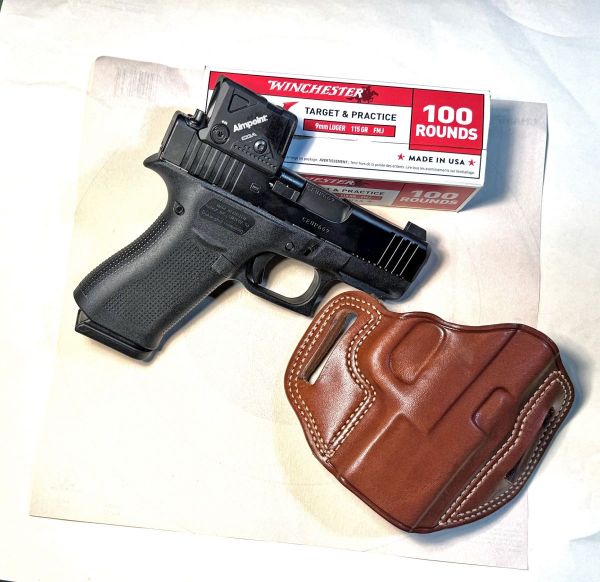
While we’re talking about it, mounting solutions are involved with innovation. The Aimpoint COA system is now open to more gun makers and their production of optics is reportedly up over previous years.
Another development is the move of the double-stack 9mm 1911 into police holsters – with optics mounted. Optics ready slides are coming online from some makers in more conventional single stack 1911s – another system which is seeing some resurgence in the market.
Whether or not you regularly carry an optics-mounted pistol (or revolver, now), having some knowledge of them, their mounting issues and best use of them, is going to be required for handgun users going forward.
– Rich Grassi