
We’re all victims of our own experience. – Walt Rauch
A common bit of prattle has to do with selecting a firearms instructor. There are those who tell us this –
“The only one who can teach you how to survive a gunfight has to have been in a gunfight.”
Okay, so the primary criteria for your proposed instructor is “been there, done that.”
The number of times that bit of wisdom has risen from those who are against a particular instructor – or for a particular instructor – is staggering. Like most of the gun shop gossip (and now “wisdom” from the error-net), perhaps it’s to be taken with a grain of salt.
Can a gunfight survivor be a great instructor? Hell yes – if that individual can teach. Likewise, if communication skills are lacking, the instructor has a diminutive persuasive ability, or there’s a lack of interest in understanding adult learning issues, no amount of “gunfight experience” will help.
Something exists to be learned, to be certain, but it’s on the student/inquisitor to dig it out.
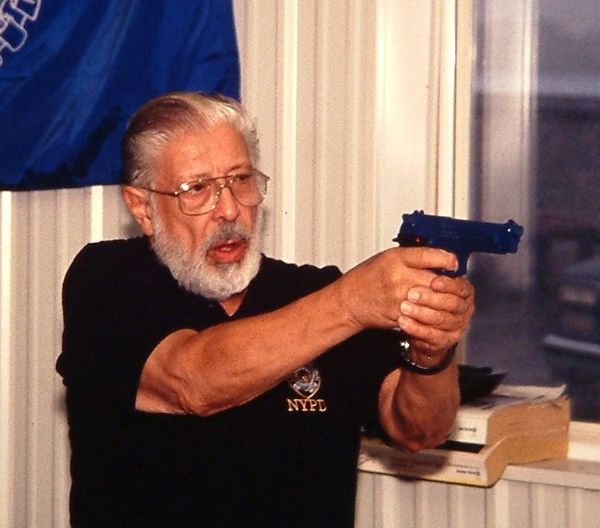
An example of a superior instructor who had more on-the-job-training than he wanted was Jim Cirillo. He was unquestionably a great persuader; I’ve seen him coach students on the line and I’ve heard him lecture – it was more like animated conversation. He was first rate.
I’ve known a large number of instructors who’ve never fired a shot operationally – and were superior instructors. How do we reconcile this?
While there are those who do extensive analysis of surveillance/car/badge camera footage of shooting incidents – and patterns are discovered – the truth of it, learned over decades, is that each fight is a distinct event. It stands alone, with some aspects that are unique.
Each participant is unique, that moment in time is one during which either – or both – of the players fervently wish they could be somewhere else. An armed robbery perpetrator doesn’t want a gunfight; he wants the plunder. Just give up and, in a good many cases, you’ll be fleeced and left behind with no unsightly gunshot wounds.
A good many shootings are spur of the moment, with lost temper, drugs & alcohol-fueled rage and, often done against someone who can’t shoot back.
It seems that our internet chat types would approve of getting a youthful gang-banger with a range of “belly-buttons” and “railroad tracks,” scars providing evidence of previously being shot and knifed – because that individual is still alive.
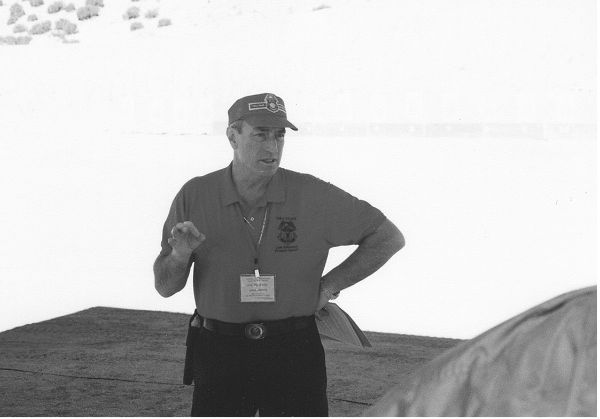
A good many instructors come from the military side of the house. Clive Shepherd had been in Royal Marine Commando - but his teaching for NRA Law Enforcement was "geared to the customer" - law enforcement instructors. His techniques for making the square range like the street are still used today.
Without footage (and, often, with footage), we are to wonder about the circumstance. People have said “video doesn’t lie” – it doesn’t but it has one viewpoint, it’s two-dimensional, and often the resolution is such that it can’t portray what one of the participants, in the grip of “fight or flight” could see.
A problem with “someone who won a fight should teach us how to fight” is that fights aren’t the same. Citizen contacts aren’t always the same, let alone fights.
Too often, we use a successful resolution of a single event to form a procedure-policy statement to always do the same thing. That’s fighting the last war and has only a little to do with the next potential war.
We had a hit on a license plate recorded during an overnight “motel list,” a routine check of foreign plates in the event of stolen tags/autos, wanted persons, that kind of thing. NCIC – and the ORI who submitted the information to that national database– told us that the plate was entered because it was associated with a dangerous wanted felony suspect.
Plans were hatched as to how to get the occupant out of the room – we’d discovered the room number from the night clerk – and one of the plans was approved.
Without belaboring the point, it worked.
That time. It won’t work every time. Our offender was a patsy and that was good for us. The next one may not fall for it.
In fact, the next time that subterfuge was tried, it didn’t work and there was a protracted barricaded subject in the room. Fortunately for all, he got tired of the small room and surrendered.
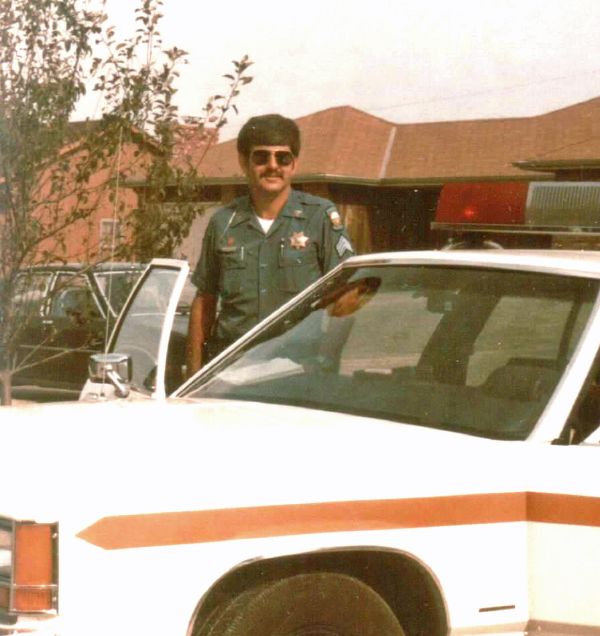
Just because something's possible doesn't make it a good idea - Jim Lindell's statement is proved out daily on the road. A great police instructor often has a resume with a lot of street time, pulling reality into the classroom and on to the range. SGT Dan Rhyne, shown here, brought that experience to his students.
It’s that way in fights. Just because someone made it through one doesn’t mean that everyone can do it the same way in every event. That’s the “Jelly Bryce” issue. He was an outlier.
He won enough fights that his style of shooting lasted in the FBI training curriculum for almost forty years. It didn’t work well for most people, hence the reason it was finally jettisoned.
Don’t buy too much into the “been there, done that” resume. It’s not meaningless but it’s never everything you need to know.
The lesson is to have the solid skills in place, be wary, watchful and predictably unpredictable. Look and listen first, then decide whether to proceed.
And if something don’t feel “right,” it ain’t.
It’s less about those who’ve won fights and more about those who were able to avoid it.
– Rich Grassi