
As we’re getting into the months when the retiree qualifications will take place, I’ve begun my practice so I’m not a complete embarrassment to myself. I’m less worried about “passing” and more concerned with looking silly.
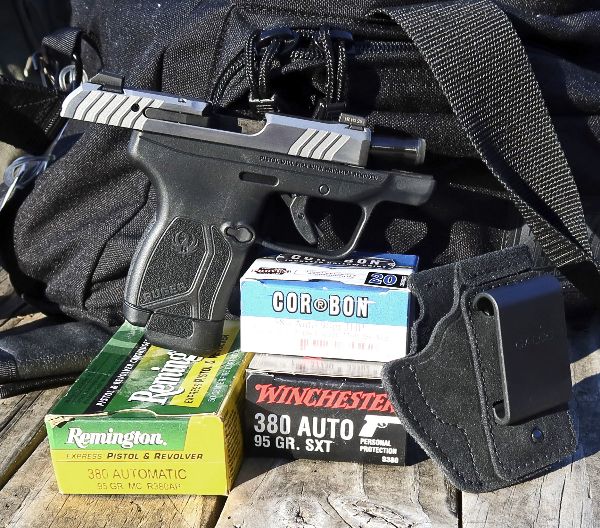
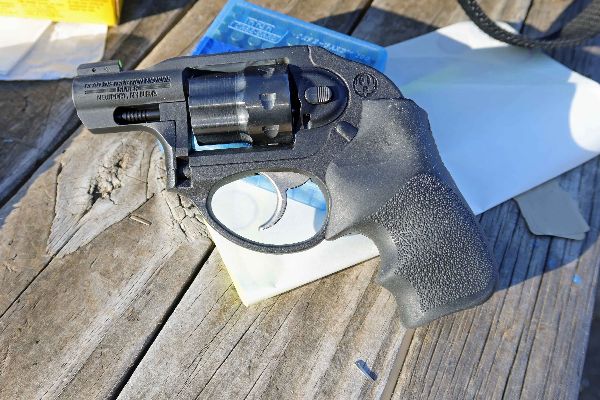
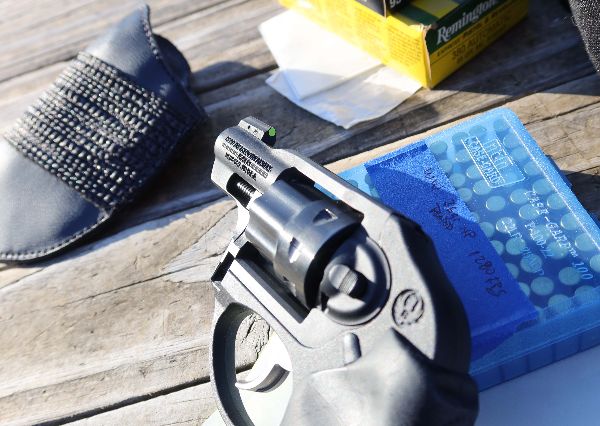
LEOSA calls for "type of gun" qualified with; the state takes it to mean auto (above, the Ruger LCP MAX) and revolver (LCR, the one below in 22LR).
To increase the challenge in practice, I’ve used smaller targets, used a normal target but cut the par times in half, and I shot very small guns over the course. This time it’s a somewhat reduced size target – the Birchwood Casey 16.5” x 24” BC-27 “Dirty Bird” – because I had them. I compounded my misery by shooting a fairly-new (to me) Ruger LCP MAX (with manual safety) 380 switching from the Galco Pocket Protector holster for the Ruger LCP II/LCP Max to the same firm’s STO-N-GO IWB holster.
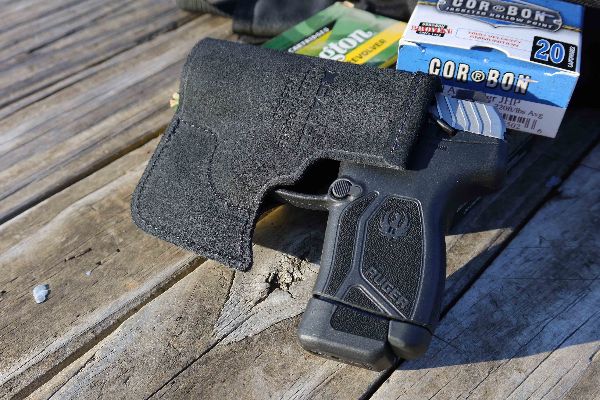
I wanted to try both rigs out and the qual I selected is fairly holster intensive.
The ammo included some old stock Cor-Bon 90 grain JHP, Winchester SXT 95 grain and some remaining Remington 95 grain FMJ.
For the revolver side, I’d tape up the target and use the Ruger LCR in 22 LR. I used some bulk pack Herter’s branded ammo for that part of the test.
With the 380, the first hit outside the 10-ring was at 7 yards fired on a one-handed stage. At ten yards, there was a 9-ring hit at 1 o’clock, another at 10 o’clock and an 8-ring hit at 9 o’clock. That was a nice round holding error.
At fifteen yards, a 9-ring at 7 o’clock, an 8-ring at four, and a 7-ring hit at 9 o’clock showed some sinking of the hold on target. The grip error increasing, I shot an image of the target after the 15-yard stage, before the 25-yard stage.
Which was a disaster. There were two eights, two sevens and six off the silhouette low.
The conclusion: shooting this much past fifty feet is a nonstarter until I get the grip part of the equation under control.
Practically, that means nothing to those who shoot at 20-feet and inside. “That’s what the gun is made for.” Besides, on the state target, some of those six low hits would “count” – for them. I don’t count them.
The sights are better than that – really good -- the trigger is easily managed and there’s more grip with this than the original LCP or the LCP-II. I’m thinking a grip sleeve arrangement like those from Hogue might push my effective range out a ways – if I get my grip sorted out first.
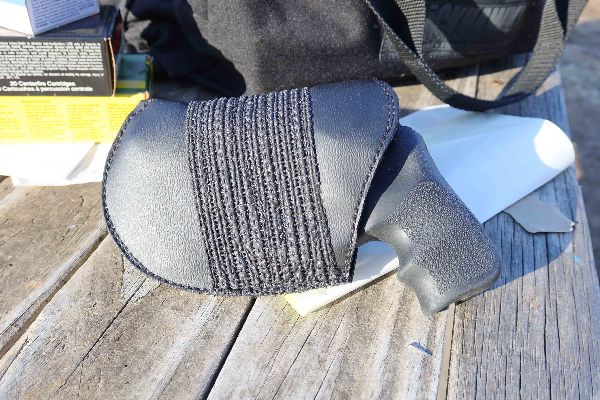
Aside from the fact that it’s a 22, the revolver I used – also a Ruger – was the LCR. Holstered in a favorite Mika Pocket Holster, there’s plenty of grip to hang onto. The gun is equipped with the LCR Ember Sight from XS Sights; the story about that project is here. After taping the target, I shot back to fifteen-yards, took a photo of the target for my record, before shooting the pair of 25-yard strings.
One hit was on the silhouette outside the rings from 25 yards. There was a hit in the 7-ring, four in the 8- and fourteen 9-ring hits. The remainder were inside the “10” and the red area marking the X-ring.
Out of fifty rounds, I had one fail to fire – but recovering the round and turning it over in the cylinder – so the firing pin would hit a different part of the rim – got it to fire.
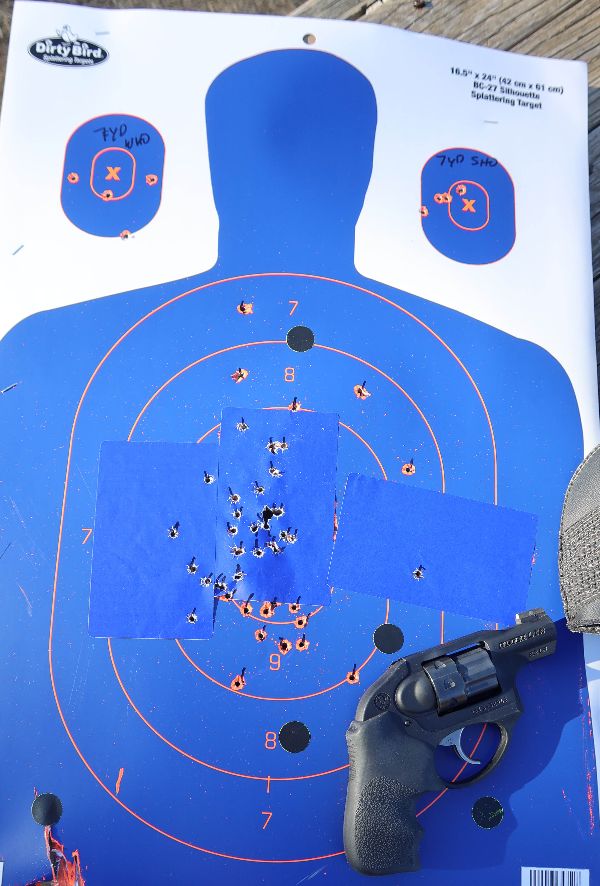
On the BC-27 target were two 10-ring “ISU” type bullseyes, one on each top corner. On the right one I fired dominant hand only from 7-yards with the round gun. The left side bull I shot one-handed with the nondominant hand. The 3 ¾” bull on the right had one in the “X,” three in the “10.” The group was 1 ¼”. On the other bull, not so good with 1-X, 3-10s and a 2 ¼” group.
After I’d done this, I saw Mas Ayoob’s video treatment of shooting small guns and the attendant problems. It’s well done. One way to run into a number of the problems he mentions is to shoot the micro gun on a police qual course. Small guns make you work harder. This exercise should make it easier to shoot the real deal with larger guns.
- Rich Grassi