
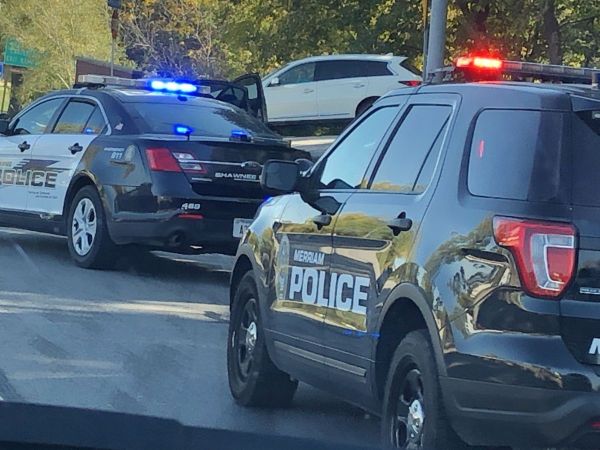
Something not covered here before likely should be; heightened tensions, rage behaviors and other nonsense that work against one’s ability to prevail (in any sense) means we should war-game this before you’re the one being contacted.
Back in the olden times, I proposed adjustments to training classes offered in our agency. One that was approved – something never before addressed – was off-duty/plainclothes officer survival.
After the in-briefing, safety brief and discussion of the activities of the three-day class, the primary rule of plainclothes and off-duty officer survival was stated: in any situation, the member of service who is on-duty, in uniform, is in charge.
I don’t care about rank, status, whether it’s our agency or a contact with another department, the one in uniform, readily identifiable, is in charge, period, end-of-story.
There was a little surprise with that statement, but I warned them of the “halo fallacy.” In the story running inside our heads, we’re the “good guy” and everyone recognizes it.
No. That never happens.
I had occasion, many years after I retired, to get stopped by the police for a traffic infraction. I slowed, carefully turned off a boulevard into a neighborhood, pulled to the right and stopped.
With the hand unbuckling the seat belt – and out of view of the soon-to-be approaching officer – I got my ID holder, an affair with visible window, into my hand. Both hands went to the top of the steering wheel.
The officer made contact, asked for the license he could see in the ID holder at eye level atop the steering wheel. When I removed the license, per his request, I heard him say, “What’s that?”
He was looking at my retired law enforcement (LEOSA) card. If I’d not had one, he’d have seen what appears to be another driver’s license from the same state – the concealed carry permit here looks exactly like a drivers’ license.
I told him what it was. He asked for it too and then asked that I remained in the vehicle. I did. While he was gone, I’ve no doubt he checked with the issuing agency for the LEOSA card.
Did I notify him I was armed? Well, in this state, your registration information shows if you have a concealed carry permit, de facto notification that the car holds an armed citizen. Right behind that LEOSA card was a license to carry.
I simply complied with instructions.
“You were trying to get out of a ticket.”
In my day, the decision to cite was made before the initial approach to the violator. I assumed it’s the case now. The reality was I was trying to not receive gunshot wounds.
I reserve that right.
In all the claptrap about rights, we forget that power and responsibility are commensurate – they have to balance for it to work.
If the traffic officer had broken bad, I had no intention to resist or act out. I well know that I will have time to explore legal remedies after the fact.
He didn’t; his conduct was professional while being wary. After the contact, he went on with his day. I went on with mine.
Contrast that with the knot head I ran into on duty. I was in a 1998 Chevrolet Lumina headed from the station to my home – to go off duty. I wandered into a DL check lane. The car I was in was outfitted with rear deck lights, wig-wag headlights, a police radio that was on – and quite loud. He walked past my post-mounted spotlight and looked down into the car, shining his light on the spare magazine pouch with two GLOCK 19 magazines therein, onto the badge on the front of my belt and onto the radio and lighting controls.
I greeted him with his name – we worked in the same building and had worked in contiguous agencies for over fifteen years.
We’d met.
He said “I don’t know you,” requested my DL and insurance. I got the county’s self-insurance documents, the registration information that showed it was the sheriff’s car and gave him my DL. He wandered off, acted like he was running everything, then gave me the documents and said “move on.”
Well, my license could have been suspended – it wasn’t, nor was it expired. Government plates don’t expire and we all got annual certificates of self-insurance for the cars.
No harm done. I thought he was a mite careless, but I know he later retired – as I did – without real incident.
The thing is that the uniform is in charge. Keep the temperature low. Be compliant.
For those hammer-heads with the "boot-licker" comments, you can wander off to play somewhere else, preferably in traffic.
The place for adversarial approaches is in court, not on the bricks.
-- Rich Grassi